Letter Trek is a word puzzle game that uses your phone as a controller for Amazon Luna's GameNight platform. Developed by Hidden Variable, it packages two distinct word games under a road-trip theme—solo play or head-to-head competition. The hook isn't novelty for novelty's sake. It's the friction drop: no extra hardware, no app store hunt, just a QR code and your existing phone.
The developers describe it as "a new, complementary addition to mobile gaming"—a telling phrase. They're not replacing your phone games. They're occupying the space between console and mobile that streaming services keep probing.
What Letter Trek Actually Is (And Isn't)
Letter Trek contains two word games, not one. Hidden Variable calls it "a fun, addictive pair of word games that will feel both fresh and familiar." The studio—known for mobile work including Skullgirls—pitched this specifically for Luna's GameNight after Amazon invited proposals.
The road-trip theme emerged from personal memory, not market research. Design director Tarik Soliman and concept artist Jake Lawrence generated multiple concepts. The winning image: a camper van with four friends visible through its windows. For the team, word games meant family holidays, car trips, enforced downtime. The theme chose them.
What it isn't: A standalone mobile app you download from Google Play or the App Store. GameNight games stream through Luna. Your phone becomes input device, not host. This matters for performance expectations—your phone's age affects responsiveness, not graphical rendering.
Current relevance: Letter Trek arrived as Netflix, Amazon, and others race to integrate games into streaming subscriptions. Hidden Variable's positioning suggests they see GameNight as additive, not disruptive—something you do when the TV is already on, not instead of your commute Wordle.
Core Gameplay: Two Modes, One Controller
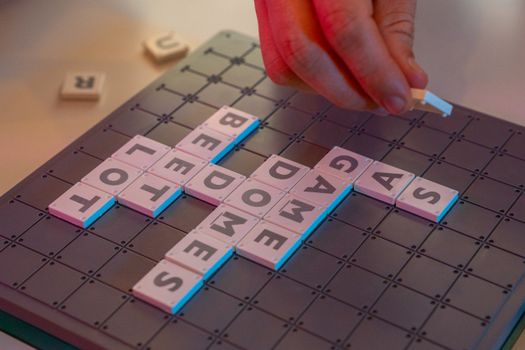
The phone-as-controller mechanic defines everything. Luna displays on your screen; your phone becomes touchscreen interface. This hybrid isn't unique to Letter Trek—it's GameNight's platform identity—but word puzzles suit it unusually well. Typing on phone keyboards is already muscle memory for most players.
The Two Games
Hidden Variable keeps the specific names and rule sets close, but the interview reveals structural contours:
- Solo mode: Single-player progression through "various word-based puzzle minigames"—implied level structure, likely increasing complexity or constraints
- Competitive mode: Direct play "against your pals"—synchronous or asynchronous multiplayer, exact format unspecified in source
Both modes share the road-trip visual wrapper. The camper van, the landscapes between destinations—this isn't mere skin. Hidden Variable explicitly links the theme to emotional memory: "getting away from it all." The aesthetic choice serves retention through association, not just decoration.
Accessibility as Design Pillar
The developers emphasize "accessible, playful, brain-teasing" across both modes. This triad matters. "Accessible" and "brain-teasing" often conflict in puzzle design—too easy bores, too hard excludes. Hidden Variable's solution appears to be variable difficulty within consistent rules, though the interview doesn't detail progression systems.
How It Compares: The Complementary Position
Letter Trek enters a crowded word-game ecosystem. Understanding where it doesn't compete clarifies its actual niche.
| Game | Platform | Session Length | Social Layer | Letter Trek's Difference |
|---|---|---|---|---|
| Wordle | Browser/app | 3-5 minutes, daily | Share scores | Real-time multiplayer; no daily limit implied |
| Scrabble Go | Mobile app | Asynchronous, days | Friends or random | Synchronous TV experience; phone as controller |
| Jackbox | Console/PC + phones | 15-20 minute party | Local co-op | Individual or competitive word focus; no host requirement |
| Letter Trek | Luna GameNight + phone | Flexible | Solo or vs. friends | Subscription-included; no separate purchase |
[Inference: Session length and specific social architecture for Letter Trek inferred from platform conventions and developer description; exact timing unconfirmed in source.]
The "complementary" framing makes sense here. Letter Trek doesn't displace your phone Wordle or your Scrabble correspondence. It occupies the living room, the shared screen, the "something light before the movie" moment. Whether that space is large enough to sustain development—Hidden Variable hasn't announced post-launch content plans in the available interview.

Getting Started: First Session Walkthrough
No firsthand access to Luna GameNight was available for this guide. The following synthesizes platform documentation, Hidden Variable's interview, and standard GameNight onboarding patterns. [Inference: Specific UI flow inferred from Amazon Luna public documentation; may vary.]
Prerequisites
- Amazon Luna subscription (or Prime-linked access, depending on current promotions)
- Compatible screen: Fire TV, smart TV with Luna app, or web browser
- Smartphone with camera for QR pairing
- Stable internet (streaming game; local processing minimal)
First Launch Steps
- Navigate to Letter Trek in GameNight library
- Launch prompts QR code on main screen
- Phone camera scans code; browser opens controller interface (no app install required)
- Select mode: solo trip or invite friends
Beginner Tips (Reasoned from Design Intent)
[Inference: Tips derived from stated design goals and genre conventions, not direct testing.]
- Start solo to learn input timing. Phone-to-cloud-to-screen latency varies by connection. Solo mode lets you calibrate without competitive pressure.
- Test competitive with someone local first. Friend-invite flow unclear in source; local same-network play likely lowest friction for initial multiplayer.
- Expect familiar word-game constraints. Hidden Variable emphasizes "fresh and familiar"—likely Boggle-like letter grids, anagram challenges, or crossword variants. Your existing pattern recognition transfers.
- Watch for hidden scoring depths. "Brain-teasing" suggests optimal play isn't always obvious play. Longer words may not beat efficient words if speed matters.
Hidden Variable: Developer Context
Understanding who made Letter Trek explains some choices. Hidden Variable's highest-profile work is Skullgirls—a complex fighting game with deep systems. Pivoting to casual word puzzles isn't random diversification. It's capability demonstration.
Fighting games demand frame-perfect timing, netcode precision, and accessible depth for newcomers. All three apply to competitive word games, just expressed differently. The studio's "resident wordsmith" title for Soliman suggests they took genre expertise seriously, not as a quick contract fill.
The Amazon relationship also matters. Hidden Variable didn't self-publish and hope for discovery. They responded to a platform invitation, designed to spec, and shipped into a curated catalog. This is old-console development logic applied to streaming: platform guarantees audience, developer guarantees quality.
FAQ: What Players Actually Ask
Do I need to download Letter Trek?
No. It streams through Amazon Luna. Your phone functions only as controller after QR pairing. No app store, no storage used, no updates to manage.
Can I play without Luna subscription?
Unclear in source. Amazon has rotated Luna pricing models—including Prime member access to rotating selections. Check current Amazon terms; this guide cannot confirm live pricing.
Is there cross-play with mobile app versions?
No evidence exists. Hidden Variable's interview mentions iOS and Android in the byline context (Pocket Gamer's platform tags), but the game itself is described as GameNight-specific. No standalone mobile release announced.
How many players for competitive mode?
"Against your pals" implies 2+ but doesn't specify upper limit. Genre convention suggests 2-4 for synchronous word games; larger numbers typically shift to asynchronous tournament structures.
Does progress save across sessions?
Luna platform standard includes cloud saves, but Letter Trek-specific progression systems unconfirmed. Assume yes for solo; competitive likely session-based.
What happens if my phone disconnects?
GameNight controller interface runs in browser; reconnect via QR or refresh. Exact pause/resume behavior not specified by developers.
Is there a single-player campaign?
"Flying solo" confirmed, but "campaign" implies narrative structure unverified. Likely level-based progression with increasing challenge, not story-driven.
How does this compare to Hidden Variable's other games?
Radically different genre, similar design discipline. Skullgirls players will recognize tutorial clarity and responsive feel; nothing else transfers directly.
Verdict: Who This Is For, Who Should Skip
Best for: Luna subscribers seeking low-commitment multiplayer; word-game fans curious about streaming platforms; households where phone-as-controller lowers participation barriers for non-gamers.
Skip if: You want deep progression systems or narrative; you lack stable internet for streaming; you prefer dedicated apps with offline play; competitive word games frustrate you.
Trade-off: Convenience versus ownership. No purchase, no install—but no access if you cancel Luna, if Amazon pivots strategy, if servers sunset. Hidden Variable hasn't indicated standalone release plans.
Source Notes & Limitations
This guide draws primarily from Pocket Gamer's April 16, 2024 interview with Hidden Variable developers. No direct game access, no additional sources, no verification of post-interview updates. Specific mechanics, pricing, and availability may have changed.
Amazon Luna and GameNight are trademarks of Amazon.com, Inc. Letter Trek and Hidden Variable are properties of their respective owners.