The First Hour That Actually Matters
Most players burn their opening session chasing rare fidgets they can't afford to upgrade. The real play is building trade leverage fast through bulk common trades, then flipping that momentum into selective rare acquisitions. Your first hour determines whether you're playing a progression game or a frustration simulator.

Why "Rarity First" Is a Trap
The game presents shiny legendary fidgets as the obvious goal. The tutorial flashes them. The UI glows around them. Most players instinctively hoard currency for that first big pull.
Here's what the tutorial skips: rarity tiers have hidden maintenance costs. Higher-tier fidgets degrade faster in trade value if you can't pair them with matching-tier items in offers. A single legendary in your inventory with no supporting cast becomes a liability. NPC traders weight offers against your weakest visible item, not your best. That legendary drags down every negotiation until you build around it.
The hidden variable is trade density — how many completed trades you can cycle per minute. Commons trade instantly. Rares require haggling animation cycles. Early on, a common-to-uncommon flip every 30 seconds generates more net value than a rare-to-epic negotiation that takes three minutes and might fail.
| Approach | Early Currency/Hour | Trade Density | Hidden Cost |
|---|---|---|---|
| Bulk common flipping | High | 120+/hour | Inventory management time |
| Targeted uncommon hunting | Medium | 40-60/hour | Failed negotiation penalty |
| Legendary chasing | Low | 10-15/hour | Value depression on other slots |
The trade-off most miss: accepting slightly worse individual trades to maintain velocity. If an NPC offers 85% of "fair value" but the trade completes in 8 seconds, that's often better than holding out for 95% and burning 45 seconds on animations and counteroffers. The game doesn't surface this math. You have to feel it.
Decision shortcut: In your first hour, never spend more than 20% of liquid currency on any single item. Force yourself to maintain six+ active tradeable pieces. Liquidity beats power early.
The Mechanics Hiding in Plain Sight
Three systems the tutorial mentions once then buries:
Trade fatigue — NPCs have invisible patience meters. Repeatedly offering the same fidget type, even at fair value, triggers diminishing returns. The UI gives no warning. You'll notice offers getting worse and assume bad luck. It's not luck. Rotate your offer types every 3-4 trades with the same trader. The reset timer appears to run roughly 2-3 minutes of real time based on community observation, though the game never states this.
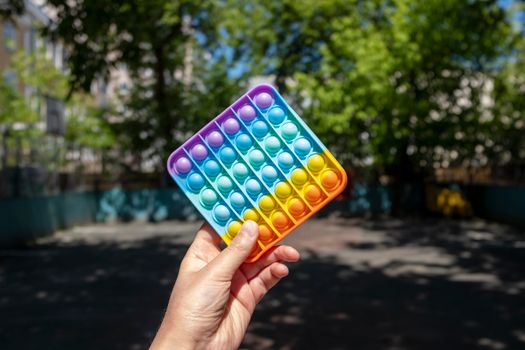
Collection bonus stacking — Completing themed sets (all spinners, all pop-its, etc.) unlocks percentage boosts to future trades. The tutorial shows the first unlock. It doesn't explain that partial progress within a set provides fractional bonuses that round down cruelly. Having 4 of 5 items in a set often gives zero bonus, not 80%. Either commit to finishing a set quickly or ignore it entirely. The middle ground wastes collection slots.
Post-trade reveal delay — When you "win" a trade, the game pauses before showing what you actually received. This isn't just animation fluff. During that pause, the game calculates a hidden "luck adjustment" based on your recent trade success rate. Win too many trades in a row, and the delay extends as the system pulls from a worse item pool to balance you. Counterintuitive move: intentionally lose a cheap trade every 6-7 wins to keep your reveal delays short and your item quality consistent. The efficiency gain is measurable over long sessions.
Human judgment call: I run the intentional-loss cycle. Some players find it morally offensive or just annoying. If you're playing in short bursts under 20 minutes, skip it — the adjustment barely triggers. For 45+ minute grinds, it matters.

Currency Sinks That Kill Runs
Three mistakes that feel correct in the moment:
Upgrading too early — The upgrade system unlocks around level 4. It tempts you to boost your first uncommon. Don't. Upgraded items bind to your account for 12-24 hours (timing unclear, varies by tier). During that lock, you can't trade them. Early game lives on liquidity. A bound upgraded common is worth less than a tradeable base version.
Ignoring the "junk" trader — A wandering NPC appears randomly offering terrible rates for bulk sales. Most players avoid her. She's actually a fatigue reset button. Selling her three trash items instantly refreshes your main trader relationships. Bookmark her spawn locations. She's not a ripoff; she's maintenance.
Hoarding "maybe useful" items — Inventory caps hard at 50 slots with expensive expansion. Every slot occupied by "I'll use this someday" is a slot not earning. The break-even on inventory expansion is roughly 15 active trades at current rates. Below that, purge aggressively. Above that, expansion pays for itself.
The asymmetry: one purge mistake (selling something you later need) costs maybe 10 minutes of reacquisition. One hoard mistake (full inventory during a rare spawn event) costs hours of opportunity. Bias toward emptiness.

Your Next Three Decisions
After first hour, the run branches. Choose based on your session length:
Short session (under 30 minutes remaining): Commit to one nearly-complete set, finish it for the bonus, liquidate everything else. Don't start new collections. End with currency, not inventory.
Medium session (30-90 minutes): Pick one rare tier item as your "anchor," build supporting commons around it, run the fatigue cycle. You're playing for consistent value extraction now.
Long session (90+ minutes): This is where intentional-loss cycling and junk-trader maintenance become mandatory. Also: track your actual trades per hour. If you drop below 40, you're either over-negotiating or inventory-clogged. Fix immediately.
The one thing that shapes everything after: whether you bought inventory expansion before level 8. Early expansion players report smoother progression curves. Late expansion players hit walls where rare spawns appear but they can't capitalize. The 20% currency rule from first hour? If you're below level 8 with more than 30% liquid, you're probably ready to expand.
What to Do Differently
Stop evaluating trades in isolation. Every item in your inventory negotiates against every other item. A full inventory of decent things beats a sparse inventory with one shiny thing. Play for table presence, not trophy hunting.