Memory prices could start falling in late 2027. That's the call from Kyung-Hyeon Kye, former president of Samsung's semiconductor division, who told engineers in Seoul that Chinese manufacturing expansion will flood the market with supply. But here's the twist most builders miss: he also warned demand might crater after 2028 if AI spending doesn't turn profitable. The memory crisis might end. A memory glut might follow. Your upgrade timing depends on which wave you're riding.
The "Surge" Nobody's Pricing In Correctly
Everyone hears "Chinese capacity surge" and thinks cheap RAM is guaranteed. Kye's actual timeline is more specific and more dangerous: supply spikes second half of 2027 or early 2028, but demand could simultaneously collapse if Big Tech's AI investments stop generating returns.
This creates three scenarios, not one:
| Scenario | Trigger | RAM Price Outcome | Your Move |
|---|---|---|---|
| Soft landing | AI demand holds, supply rises gradually | Moderate decline through 2027-2028 | Wait for 2027 sales, buy normally |
| Supply glut | Chinese fabs overshoot, AI demand stays flat | Sharp crash, possible oversupply | Aggressive upgrade, stock spare kits |
| Demand cliff | AI bubble bursts, both supply AND demand spike then crash | Volatile, unpredictable | Buy only what you need, hoard cash |
The hidden variable: memory manufacturing has brutal lead times. Fabs being planned now won't spin up until 2027. But AI demand is driven by quarterly earnings calls and venture sentiment. The supply side moves like a glacier. The demand side moves like a tweet. That mismatch is where your risk lives.
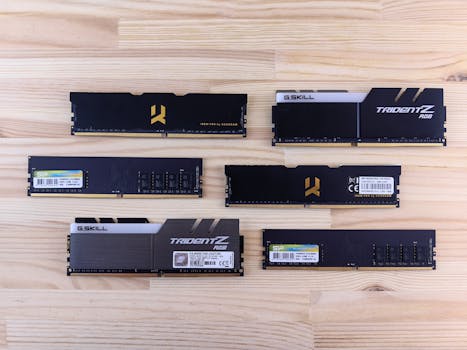
Current DDR5 kit prices sit roughly 3-4x above year-ago levels per the PC Gamer report. If you're running 16GB and struggling, the "wait for 2027" strategy assumes your current kit survives 18+ months without failure. For DDR4 holdouts on aging platforms, the calculation differs—you're one motherboard slot failure away from forced DDR5 migration at peak prices.
What "Post-Super Boom" Actually Looks Like for Builders
Kye explicitly told Korean engineers to prepare for a "post-super boom." Translated: the memory industry has seen this movie before. Boom-bust cycles are structural, not accidental.
The trade-off most builders misunderstand: buying at peak crisis prices versus gambling on timing the trough. If you need 32GB for work today, waiting 18 months to save 40% on RAM while losing billable hours to swap thrashing is terrible math. But if you're contemplating 64GB "for future-proofing" at current premiums, you're making a speculator's bet, not a user's decision.
Here's the asymmetry Kye's warning reveals:
- Supply surges are predictable (we know Chinese fabs are being built)
- Demand collapses are not (depends on AI revenue recognition, interest rates, tech valuations)
- Memory has no resale value (unlike GPUs, RAM depreciates to zero the moment you open the package)
If you buy a $400 64GB kit today and prices halve in 18 months, you've lost $200 with certainty. If you wait and prices don't fall, you've lost productivity with probability. The first loss is larger and more certain than most builders admit.
For new builders specifically: prioritize motherboard RAM slots over current capacity. A board with four DIMM slots and 32GB now beats a board with two slots maxed at 64GB. You preserve optionality without paying the full future-proofing tax.

The One Thing to Do Differently
Stop treating memory as a commodity you time like Bitcoin. Kye's prediction is directional, not contractual. Chinese capacity could slip. AI demand could accelerate. A geopolitical event could disrupt everything. Build for your actual workflow, not a price chart. If your current setup bottlenecks your work, buy what you need and ignore the prognostication. If you're comfortable now, keep your cash liquid and revisit in Q3 2027 when the fabs actually start humming. The builders who win aren't the ones who perfectly timed the bottom. They're the ones who didn't overpay for capacity they weren't using.
Disclaimer
This article is informational only and does not constitute professional financial or investment advice. Memory pricing involves geopolitical, technological, and market risks that cannot be fully predicted. Consult a qualified financial advisor before making significant purchasing decisions based on market forecasts.



