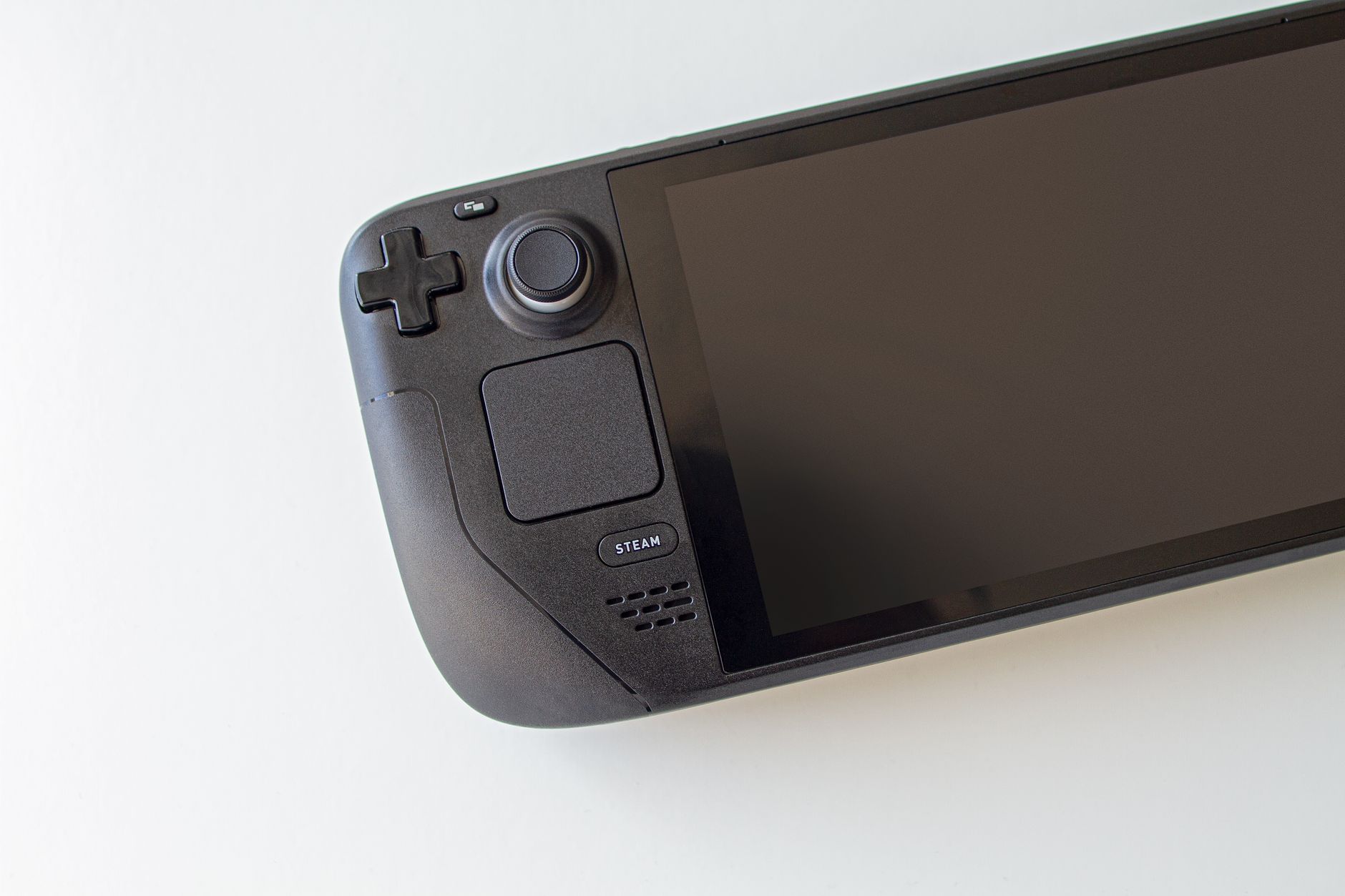
Gloomwood’s April 2026 update added native controller support and earned the game a Steam Deck Verified badge. The update is real, but mapping a stealth-immersive sim to analog sticks introduces hard trade-offs. Here is how the control schemes and playstyles actually stack up on a gamepad, ranked by viability in the current build.
Ranking Criteria and Scope
This tier list evaluates controller-only configurations on the Steam Deck. We are not ranking mouse-and-keyboard setups, nor are we ranking the game's overall quality. The axes are input precision, menu navigation speed, and stealth viability without resorting to a gyro-assist or trackpad override. If a setup requires you to constantly switch to the Deck's touchpads to function, it loses points here. The scope is limited to the options available in the native update; third-party community layouts are excluded due to patch volatility.
S-Tier: Native Default with Gyro Aiming Enabled
Best for: Players who want the closest analog to mouse precision without sacrificing the couch position.
Skip if: You physically dislike gyro controls or play in a setup where resting the Deck at an angle is awkward.
Trade-off: You must recalibrate the gyro if you switch between sitting and lying down frequently.
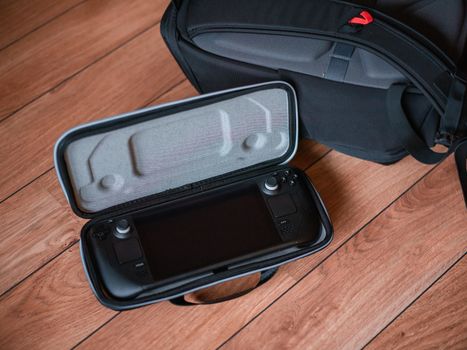
The default layout shipped with the update is surprisingly competent for basic movement and crouching, but its real strength is the gyro layer. Gloomwood’s stealth demands precise aiming for throwable distractions and silent takedowns. Analog sticks alone cannot reliably hit a narrow window at five meters. The gyro fills that gap by letting you micro-adjust the reticle. You lose the snap-speed of a mouse flick, but you gain a playable stealth loop entirely from a reclined position.
A-Tier: Native Default (Gyro Off)
Best for: Strictly traditional gamepad users who want a clean, predictable layout.
Skip if: You plan to engage with the game's higher difficulties where missed throws equal death.
Trade-off: Acceptable for exploration and broad combat, but stealth encounters become noticeably harder.
Running the native layout flat, without gyro, reveals the ceiling of analog stick aiming in a game built around tight corridors and fast reactions. Movement feels responsive. Vaulting and sliding map well to the face buttons. The friction appears exclusively when you need to aim. You will adapt, and the game is still beatable, but you are playing a harder version of Gloomwood than the developers calibrated for. This is the "pure" gamepad experience, warts and all.
B-Tier: Community Trackpad-Hybrid Layouts
Best for: Players who refuse to use gyro but want mouse-level aiming from the couch.
Skip if: You want a setup that survives future patches without manual tweaking.
Trade-off: You are effectively turning the Deck into a mini laptop; the ergonomic benefit of a gamepad erodes quickly.
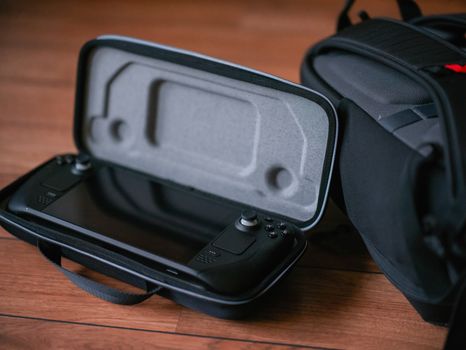
These layouts map the right trackpad to raw mouse input, preserving aim speed while keeping movement on the left stick. In a vacuum, this is the most accurate control method outside of desktop mode. In practice, it sits in B-tier because Gloomwood’s inventory management—pulling items, dragging them to slots—was designed for a mouse cursor. When you must rapidly swap a key or a health syringe during a tense moment, sliding your thumb off the right stick to the trackpad breaks your grip and your spatial awareness. It works, but it fights the hardware's form factor.

C-Tier: "Face Button Only" Custom Mappings
Best for: Almost no one. This exists as a cautionary state.
Skip if: You intend to actually enjoy the game.
Trade-off: Maximum simplicity in exchange for making the game substantially unfun.
Some users attempt to map every inventory slot and interact function to the face buttons and bumpers, avoiding both gyro and trackpads entirely. The logic is understandable: keep both thumbs on sticks at all times. The outcome is a cluttered, unreadable button map where you are constantly holding modifiers to access basic tools. Gloomwood’s UI does not support this density of mapping gracefully. You will open the wrong slot. You will drop the wrong item. The cognitive load of remembering the layout exceeds the difficulty of the game itself.
Meta Caveats and Patch Sensitivity
Gloomwood has been in early access for years, and its control schemes have shifted before. The April 2026 update and its Verified status provide a stable baseline right now, but developer Dillon Rogers has historically revised input systems based on player feedback. If a future patch reworks the inventory UI—something the community has requested since launch—the B-tier trackpad hybrids could jump to A-tier, or the native default could break. Lock your Steam Deck controller profile once you find a setup that works, and do not update blindly before checking patch notes.
Additionally, the Verified badge guarantees the game boots and runs at acceptable framerates with default settings. It does not guarantee that every edge-case interaction—like pulling a specific item from a nested backpack while crouched behind a crate—will feel smooth on a gamepad. Those moments remain the domain of mouse and keyboard. Controller support is a massive quality-of-life win for couch players, but it is an accommodation, not a full parity port.
FAQ
Is Gloomwood actually playable on a Steam Deck now?
Yes. The April 2026 update added native controller support, and Valve awarded the game a Verified badge, confirming it runs within expected performance and usability parameters on the Deck out of the box.
Do I need to use gyro controls to play Gloomwood on a controller?
No, but the game's stealth mechanics heavily reward precise aiming. Playing without gyro is viable on standard difficulty, but you will face a steeper challenge curve during encounters that require throwing distractions or landing quick shots.
Will my custom Steam Deck controller layout break when the game updates?
Possibly. Native layouts built into the game are maintained by the developers, but custom community profiles are tied to specific input logic. If a patch changes how the inventory or aiming behaves, custom layouts may need to be rebuilt.
Written based on reporting by Shaun Prescott, PC Gamer, April 16, 2026.