Tomodachi Life is not getting a new mainline release. What is happening: Nintendo has quietly expanded the 2013 3DS life-sim with a small but meaningful content injection tied to the Pokémon 25th anniversary cycle, specifically adding starter Pokémon as obtainable Mii costumes and island visitors. This matters because it signals Nintendo still views the IP as commercially viable despite years of dormancy, and it gives lapsed players a concrete reason to power on aging hardware. The catch? This is distribution-window content, not a systemic update, and Nintendo has not committed to further support, a Switch port, or any sequel.
The Anti-Consensus Reality: Tomodachi Life's "Dead" Status Is Misleading
Most gaming coverage treats Tomodachi Life as a buried 3DS curio. That's wrong in two ways.
First, the game sold roughly 6.5 million copies worldwide—a figure that outperformed several first-party Nintendo titles that did receive Switch sequels. The commercial case for revival exists. Nintendo simply hasn't acted on it, likely because the 3DS's dual-screen architecture and StreetPass mechanics don't map cleanly to Switch hardware. The Pokémon crossover content suggests internal IP coordination continues, which is often a leading indicator of broader franchise activity.
Second, the game's social mechanics created genuine network effects that most modern life-sims don't replicate. Tomodachi Life's relationship algebra—where Mii personalities clash, fall in love, and generate emergent drama—depended on large friend-code pools that have collapsed as 3DS online infrastructure degrades. The new Pokémon content is single-player-obtainable, which sidesteps this problem but also highlights it. Nintendo is essentially patching around the decay of the game's core social loop rather than fixing it.
Here's the trade-off most players miss: powering up your 3DS today gains you access to limited-time Pokémon costumes but commits you to Nintendo's aging digital ecosystem. eShop closure in March 2023 already eliminated new purchases. Your existing downloaded content persists, but redownloads require Nintendo Account linking that many original owners never completed. If you factory-reset your system, you may lose access permanently. The asymmetry is stark—short-term novelty, long-term platform risk.
| Factor | Current Status | Player Implication |
|---|---|---|
| New content availability | Limited distribution window via SpotPass | Download soon or risk missing it |
| 3DS online functionality | Partial sunset; friend lists functional but shrinking | Social features degraded |
| eShop access | Closed for purchases; redownloads conditional | Digital ownership increasingly fragile |
| Switch port/sequel | No announcement; Pokémon crossover suggests IP awareness | Possible but unverifiable |
What remains unknown: whether this Pokémon collaboration is a one-off promotional artifact or the start of staggered content drops. Nintendo's pattern with dormant IPs is inconsistent—Animal Crossing received irregular updates for years before New Horizons, while others like Advance Wars sat for over a decade. The Pokémon Company's involvement adds complexity, as their licensing timelines operate independently of Nintendo's software schedules.
What the Update Actually Does (and Doesn't) Change
The confirmed additions are narrow: three starter Pokémon costumes (Bulbasaur, Charmander, Squirtle) and corresponding visitor appearances on Mii News broadcasts. No new buildings, no relationship mechanics, no island expansion. For completionists, this is meaningful—Tomodachi Life's catalog is finite, and each new item shifts the percentage. For casual players, it's roughly 20 minutes of new novelty before the underlying loop reasserts itself.
The likely player impact breaks along two axes:
Engagement depth. Hardcore players with archived save files can integrate costumes immediately. New or returning players face the game's slow-burn progression gate—certain shops and features unlock based on total play time and islander count, meaning you cannot access costume customization from hour one. Nintendo's promotional timing assumes existing retention; it does little to onboard newcomers.
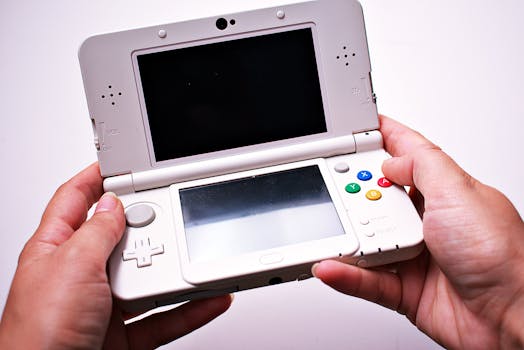
Platform friction. The 3DS's physical design—dual screens, one resistive-touch, clamshell form—created specific interaction rhythms that emulators struggle to replicate. Citra and its derivatives exist but occupy legal gray areas and lack StreetPass functionality. Nintendo has shown no interest in official emulation solutions for this title. Your hardware options are: original 3DS/2DS systems (increasingly expensive on resale markets, battery degradation common), or nothing.
The hidden variable here is save data portability. Tomodachi Life stores island data locally with no cloud backup. System transfers between 3DS units are possible but require both devices functional and present—a barrier if your original hardware has failed. Nintendo's repair program ended for most 3DS models in 2023. Your island, if you've invested years, is one dropped console away from erasure.
What players should watch next:
- Nintendo Direct presentations for any Tomodachi Life mention, particularly around fiscal year-end (March) when dormant IP revivals often surface
- The Pokémon Company's 2025 collaboration calendar—additional Nintendo crossovers would strengthen the "active franchise" signal
- 3DS homebrew preservation efforts, which may eventually offer save extraction tools Nintendo never provided
The One Decision You Should Make Differently
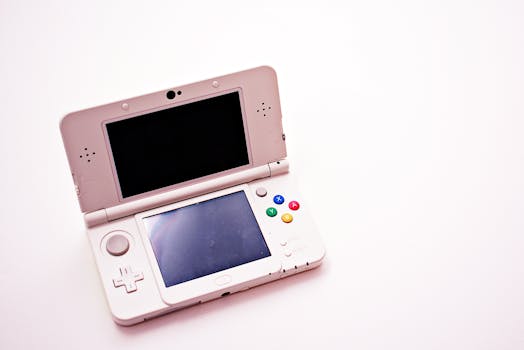
If you own Tomodachi Life and haven't launched it since 2020, treat this as a hardware-check moment, not a content moment. Power on your 3DS, verify your save loads, trigger the SpotPass download, and consider whether your island data warrants manual backup via system transfer to secondary hardware. The Pokémon costumes are forgettable. The real risk is waking up in 2026 to a dead console and no path to recovery. Nintendo is telling you the franchise still breathes; they're not promising to save your data.