News Summary
In a move that has sent ripples of excitement through the cozy gaming community, Eric "ConcernedApe" Barone has officially pulled back the curtain on the highly anticipated 1.6 update for Stardew Valley. Originally launched as a predominantly single-player farming simulator, Stardew Valley is now taking its most significant step toward becoming a fully realized multiplayer experience. The headline feature of this massive patch is the introduction of split-screen cooperative play, a technical milestone Barone has been quietly working toward for over two years. Alongside this foundational change, the update brings a new late-game festival, an expanded world map, additional romance events for existing spouses, and a profound reworking of the game’s underlying code to support these ambitious additions.
The announcement, made via a detailed blog post on the game's official website, confirms that the 1.6 update will arrive later this month across all platforms. For a game that has sold over 30 million copies since its 2016 release and is renowned for being developed almost entirely by a single person, this update represents a monumental shift in how players will interact with the tranquil valley of Pelican Town.

Deep Dive
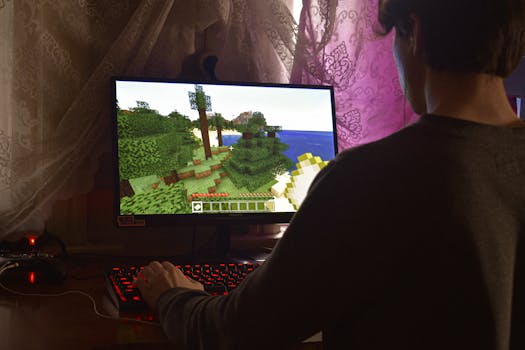
To truly understand the scale of the 1.6 update, one must look at the technical and mechanical overhauls Barone has implemented. At the top of the list is the native split-screen multiplayer. Previously, Stardew Valley supported online co-op, allowing up to three friends to join a host's farm over the internet. However, local split-screen introduces a labyrinth of new challenges, particularly for a 2D pixel-art game built on an older framework. Barone had to completely rewrite the camera system, allowing it to either track both players dynamically when they are close together or split cleanly down the middle when they venture too far apart.
The UI has also undergone a massive transformation. Menus, inventory screens, and dialogue boxes can now be opened independently by each player without pausing the game for the other. This required decoupling thousands of hardcoded UI elements from the game's pause state. Furthermore, players in split-screen mode can now visit different locations simultaneously—a feature that required Barone to optimize how the game loads and unloads assets in memory to prevent framerate drops or crashes.
Expanding the Valley
Beyond the technical wizardry of split-screen, the 1.6 update expands the physical world of Stardew Valley. Players will discover a new northern expansion to the map, accessible after repairing a broken bridge near the mountain lake. This area introduces a new biome: the Fern Islands reef expansion, which transitions into a dense, mystical woodland known as the Hearthwood. This new forest is home to unique foraging items, a new type of hardwood tree, and a hidden pond that serves as the gateway to the update’s headline festival.
The "Festival of the Moon" is a new late-game event taking place on the 28th of Fall. Unlike standard festivals, the Moon Festival requires players to have reached at least 4-hearts of friendship with the local wizard, Rasmodius. The festival involves a magical, glowing foraging hunt through the Hearthwood at night, culminating in a communal feast where the valley’s residents share their deepest wishes for the upcoming winter. Completing the festival's unique minigame rewards players with the "Moonlight Pearl," a rare item that can be combined with iridium bars to craft a new set of cosmetic armor and a unique ring that slowly regenerates health and energy while outdoors at night.
Deepening Relationships
Barone has also heard the cries of players who felt that marriage in Stardew Valley sometimes felt stagnant after the initial wedding. The 1.6 update introduces "Decade Events"—special, multi-part dialogue sequences that trigger after a player has been married to an NPC for ten in-game years. These events delve deeper into the long-term psychological and emotional growth of the characters. For instance, Shane’s decade event deals with his continued journey of sobriety and his fears about aging, while Abigail’s explores her desire to travel the world and how she balances that with her life on the farm. These events add a heartbreaking, beautiful layer of realism to the game’s romance system.
Historical Context
The trajectory of Stardew Valley is one of the most documented and celebrated stories in modern indie game development. Released in February 2016 after four years of solo development by Barone, the game was initially viewed as a love letter to the Harvest Moon franchise. At the time, the farming sim genre was considered relatively niche, and fans were frustrated with the direction publisher Natsume was taking the Harvest Moon series.
Barone’s game exploded in popularity, largely fueled by word-of-mouth on platforms like Reddit and Twitch. It proved that there was a massive, underserved market for relaxing, progression-based games. However, Stardew Valley was never meant to be a multiplayer game. The codebase was written in XNA, a deprecated Microsoft framework, and was strictly single-threaded.
When Barone announced multiplayer for the 1.3 update in 2018, it took over a year of grueling work to retrofit the game's engine. He had to rewrite the entire save system, implement a server-client architecture, and ensure that the complex daily schedules of over 30 NPCs could be synchronized across different machines. That update laid the groundwork for online play, but split-screen was still considered technically unfeasible without a total engine overhaul.
The fact that the 1.6 update achieves split-screen is a testament to the gradual, meticulous refactoring Barone has performed over the last eight years. Moving the game to newer versions of MonoGame and Xamarin allowed him to access modern hardware capabilities, specifically the multi-threading required to render two separate viewpoints simultaneously without bringing the CPU to a halt. This historical context makes the 1.6 update not just a feature drop, but the culmination of a half-decade-long technical journey.
Expert Take
From an industry perspective, the 1.6 update for Stardew Valley is a fascinating case study in live-service development done without the predatory monetization that usually accompanies it. Most games that receive major content updates years after launch—such as No Man's Sky or Fortnite—are backed by massive studios or sustained by microtransactions. Barone has provided all of this for free, funded entirely by the game's initial sales and its consistent presence on bestseller charts.
Technical Architecture
"The split-screen implementation in a tile-based 2D game is notoriously difficult because you can't just move a virtual camera," explains Dr. Sarah Lin, a game engine architecture specialist and professor at the DigiPen Institute of Technology. "In a 3D game like Minecraft, you just change the render frustum. In a 2D game like Stardew Valley, the world is drawn frame-by-frame based on the player's coordinates. Barone essentially had to program a second, parallel rendering pipeline that can dynamically slice the screen. Doing this while maintaining a stable 60 frames per second, especially on older Nintendo Switch hardware, is an extraordinary feat of optimization."
Genre Evolution
Furthermore, the introduction of the Hearthwood biome and the Moon Festival highlights a subtle shift in the cozy gaming genre. For years, cozy games have been criticized for lacking meaningful end-game content. Players often reach maximum farm optimization by Year 3 and abandon the save file. By gating the Moon Festival behind late-game wizard friendship and introducing "Decade Events," Barone is actively designing reasons for players to maintain long-term engagement.
"Barone is essentially future-proofing the game," notes industry analyst Michael Choi. "By adding events that trigger after ten in-game years, he is acknowledging that Stardew Valley isn't just a game people play for a weekend; it's a digital homestead where players spend hundreds of hours. He is catering to the ultra-hardcore fanbase that has been playing since 2016, giving them entirely new text and events they have never seen before. It’s a masterclass in community retention."
The decision to keep all platforms in parity for the 1.6 launch is also noteworthy. In an era where cross-platform play and simultaneous updates are still struggled with by AAA publishers, a solo developer ensuring the Switch, PlayStation, Xbox, Mobile, and PC versions all receive the split-screen feature on the same day sets a high bar for the industry.

Player Perspective
If the immediate reaction across social media is any indication, the player community is ecstatic, though cautiously optimistic about the technical performance. On Reddit’s r/StardewValley, the announcement post garnered over 15,000 upvotes within the first six hours, making it one of the most popular posts in the subreddit’s history.
The most celebrated addition is undeniably the split-screen feature. For years, couples and families have requested the ability to play together on a single couch. While online multiplayer existed, it required two separate devices and copies of the game, creating a barrier to entry for households sharing a console.
- The "Couch Co-op" Crowd: Players with young children have been particularly vocal in their praise. Many have stated that the complexity of navigating online lobbies is too much for younger kids, but sitting side-by-side with a parent to water crops and feed chickens is the exact experience they’ve been waiting for.
- The Romantics: The "Decade Events" have sparked a massive wave of emotional reactions. Long-time fans have taken to Twitter to share screenshots of their in-game spouses, expressing joy that characters like Elliott or Leah will finally have more dialogue that reflects the passage of time. "I’ve been married to Elliot in-game for six real-life years, I need to know how he's doing!" wrote one user.
- The Min-Maxers: The competitive farming community is already dissecting the implications of the Moonlight Pearl ring. Early theorycrafting suggests that the energy regeneration effect will drastically reduce the need for consuming food during late-game skull cavern runs, potentially altering the established speedrunning meta for completing the "Perfection" tracker.
However, the optimism is not without a dose of apprehension. Veteran players remember the rocky launch of the 1.3 multiplayer update, which was plagued by desynchronization bugs, lost items, and corrupted save files. While Barone’s QA process has improved dramatically since 2018, the sheer novelty of split-screen in this specific engine has led some players to adopt a "wait and see" approach. Many have pledged to start entirely new farms rather than risking their eight-year-old save files on day one.
Looking Ahead
The 1.6 update raises an inevitable question: what is the ceiling for Stardew Valley? When Barone originally announced the 1.5 update in 2020, he explicitly stated that he believed it would be the final major update, intending to finally begin work on his next project, Haunted Chocolate. Yet, here we are in 2024, preparing for another massive content drop.
This pattern suggests that Barone may never truly "finish" Stardew Valley, much like Toby Fox continues to add content to Undertale years after its supposed conclusion. The game has ceased to be a product and has instead become a living canvas for Barone’s evolving skills as a developer.
Looking forward, the success of the 1.6 split-screen implementation could open the door for even more ambitious multiplayer features. If the engine can now handle two viewpoints on one screen, one could speculate about future additions such as:
- Competitive Festivals: PVP elements introduced into the standard town events, where split-screen players can compete directly in fishing or scavenging minigames.
- Specialized Farm Roles: Allowing split-screen players to permanently assign themselves to specific roles (e.g., one player manages the greenhouse and animals, while the other handles mining and foraging) with tailored UI layouts to match.
- Modding Integration: The introduction of split-screen will undoubtedly inspire the modding community. We can expect to see mods that allow 3 or 4-player horizontal split-screen on ultrawide monitors, pushing consumer hardware to its absolute limits.
Ultimately, the 1.6 update cements Stardew Valley not just as a masterpiece of indie development, but as a foundational pillar of modern gaming culture. It is a game that refuses to be left behind by technological advancements, constantly adapting to utilize modern hardware while retaining the charming, low-fi aesthetic that made it famous. As the release date later this month approaches, Pelican Town stands ready to welcome players back home—this time, with room on the couch for a friend.