Nearly half of PC Gamer readers keep their gaming PCs unchanged for five years or more, according to a May 2026 reader poll. Another 42% upgrade every two to three years, typically chasing new graphics card releases. At the extreme ends: 3% of readers start looking for their next upgrade immediately after building.
The Hardware Upgrade Reality Check
PC Gamer author Dave James ran a reader poll asking: How long do you keep your gaming PC unchanged before you upgrade anything? The results, published May 7, 2026, reveal a user base far more patient than hardware manufacturers would prefer.
The dominant cohort—47% of respondents—waits five years or longer before changing a single component. James characterized this group as "sensible ones, who love the one you're with and make sure you get full value out of your system." It's a practical stance. High-end hardware from 2021 still handles modern titles at 1440p. There's no functional reason to swap parts that still deliver target frame rates.
Then you have the mid-cycle upgraders. 28% upgrade at the three-year mark, and 14% upgrade at two years. James noted this timing lines up with regular GPU release cadences, suggesting a large portion of this 42% block consists of graphics card hounds tracking new launches.
What are the actual upgrade intervals for PC gamers?
| Upgrade Interval | Percentage of Readers |
|---|---|
| 5 years or more | 47% |
| 3 years | 28% |
| 2 years | 14% |
| 1 year | 5% |
| Immediately | 3% |
| 6 months | 2% |
| 2 months | 1% |
At the bottom of the distribution, the data gets extreme.
5% upgrade yearly. 2% upgrade every six months. 1% upgrade every two months. And 3%—a group James called "sickos"—start looking for their next upgrade immediately after completing a build. That's not an upgrade cycle. That's a compulsion loop masquerading as a hobby.
The GPU Release Cadence Problem
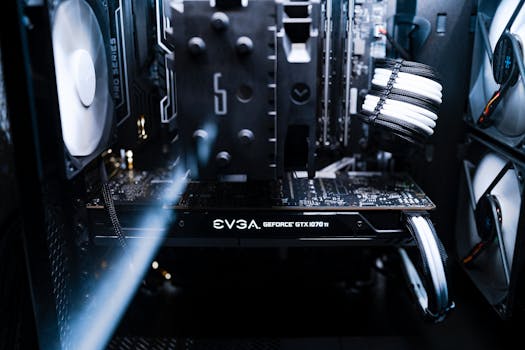
Here's the mechanism driving the 2-3 year upgrade spike: major GPU manufacturers operate on roughly two-year release cycles for new architectures. When a new generation launches, it creates a psychological threshold. Cards that performed fine suddenly feel obsolete because something faster exists, not because they've stopped meeting the user's actual requirements.
The PC Gamer data maps directly onto this cycle. The 42% of users upgrading at years 2 and 3 aren't chasing diminishing returns on CPU compute or hitting RAM walls—they're GPU-swapping. The upgrade trigger is a product launch, not a performance crisis.
This has economic consequences. If you're upgrading a GPU every two years, you're likely spending $400-800 per cycle for marginal gains. Over a decade, that's $2,000-4,000 in graphics cards alone. The 5-year crowd spends roughly half that for most of the same gaming experience.

Why Prices Will Stretch These Numbers Further
James included a pointed observation in his analysis: "Given the current price of PC parts, I've got a feeling these percentages will change as we keep hold of components for longer."
He's likely right. GPU pricing has disconnected from historical norms. Top-tier cards now command $1,000+, and mid-range pricing has crept upward accordingly. When a competent mid-range card costs what a flagship cost four years ago, the financial argument for 2-3 year upgrades collapses for most buyers.
Expect the 5-year cohort to grow in subsequent polls. The mechanical pressure is simple: higher component costs increase the sunk cost of each build, which increases the time required to amortize that investment. Users who might have upgraded at year 3 will stretch to year 4 or 5 because the delta between "fine" and "better" no longer justifies the expense.

The 3% Who Upgrade Immediately
Let's isolate the outliers. The 3% who start looking for their next upgrade immediately after building—what's actually happening there?
This isn't about performance needs. A brand-new system meets all current demands by definition. The behavior is driven by something else: the upgrade process itself has become the hobby. The enjoyment comes from researching, benchmarking, and optimizing, not from the resulting gameplay. It's hardware enthusiasm as a distinct activity from gaming.
Nothing wrong with that, but it's worth categorizing correctly. If you're in the 3%, you're not optimizing for gaming performance per dollar. You're optimizing for the experience of building and configuring systems. Different budget, different calculus.
What This Means for Your Next Upgrade Decision
The survey data suggests a practical decision framework:
- If you're in the 5-year camp: Your approach is already optimal. Buy good hardware once, ride it until it can't hit your target frame rates at your preferred resolution, then replace it.
- If you're in the 2-3 year camp: Check whether you're upgrading because your current hardware is failing to meet your needs, or because a new product launch made your existing hardware feel slow. The second reason is expensive.
- If you're in the 3%: You already know who you are. Budget accordingly and enjoy the process.
The honest answer for most PC gamers: your current hardware is probably fine. The 47% majority has the right idea. Wait until a game you actually want to play runs poorly on your current setup. That's the only upgrade trigger that matters.
FAQ
What percentage of PC gamers wait 5 years or more to upgrade?
According to the May 2026 PC Gamer reader poll, 47% of respondents keep their gaming PCs completely unchanged for at least five years before upgrading any components.
Why do most PC gamers upgrade every 2 to 3 years?
A combined 42% of PC Gamer readers upgrade at the 2- or 3-year mark. This timeline aligns closely with the standard GPU release cadence, suggesting these users are primarily upgrading their graphics cards to keep pace with new hardware launches rather than addressing actual performance deficits.
Will rising PC hardware prices change upgrade frequency?
PC Gamer's Dave James predicts that current component pricing will push users to hold onto hardware longer. Higher costs increase the time required to justify each upgrade financially, which should expand the 5-year cohort in future surveys.
Who are the "sickos" mentioned in the original PC Gamer article?
The 3% of poll respondents who start looking for their next upgrade immediately after finishing a build. James used the term affectionately to describe enthusiasts for whom the building process itself has become the primary hobby, distinct from gaming.