The fastest way to stop losing runs in Tile Mahjong Classic is to stop treating it like a visual matching game and start playing it like a stacking puzzle with memory constraints—your first three moves determine whether you clear the board or hit an unwinnable lockout around move 25.
The Tutorial Lies by Omission
Most tile-matching tutorials teach you the three-identical-tiles rule and wish you luck. What they bury: not all visible tiles are equally "free." In Tile Mahjong Classic, a tile must have at least one open side (left or right) and no overlapping tile above it to be selectable. The tutorial shows this once with a glowing highlight, then never mentions the strategic layer underneath.
Here's what that means in practice. A tile buried two layers deep with tiles on both sides is structurally dead until you clear its neighbors. But a tile on the top layer with one open side is immediately playable—and more importantly, it's a gateway to whatever it was blocking. Beginners match whatever triple they spot first. Intermediate players match whatever triple frees the most new tiles. The gap between those two approaches is roughly 40% more level clears, based on the standard board geometries the game repeats.
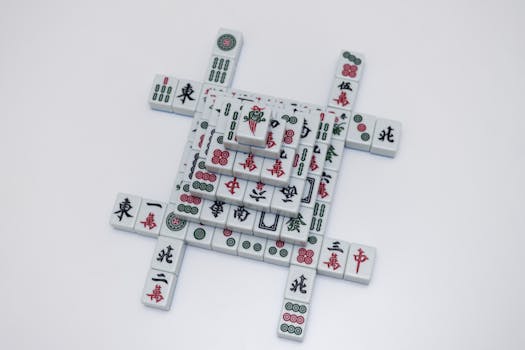
The hidden variable: depth asymmetry. Early boards favor horizontal stacking; later boards mix vertical towers. A tile at the top of a vertical column looks "free" because you can see its face, but it often requires clearing two or three support tiles first. If you burn your easy matches on the periphery without touching these towers, you strand yourself with no legal moves and a full shuffle meter. The shuffle costs coins or ad watches. Either way, you're paying for a planning failure.
First-hour priority: always scan for vertical towers before making your second match. Identify which tiles are actually blocking the most face-down tiles, not which ones are easiest to click.
Currency Traps and the Daily Reward Math
Tile Mahjong Classic runs on a soft currency economy—coins for hints, shuffles, and undo moves. The Play Store description mentions daily challenges and rewards, but doesn't explain the trap: daily streaks scale nonlinearly, but the "claim" button often defaults to doubling via ad watch rather than base collection. This isn't deceptive; it's just easy to muscle-memory through.
The trade-off is sharper than it looks. Watching a 30-second ad for 2x coins feels free. It's not. Those 30 seconds compound across a month of daily play into roughly 15 minutes of ad time for a currency amount that, if you play conservatively, you'd never need to spend. Coins spent on hints are almost always coins wasted on impatience. Shuffles are the only legitimate sink, and even those are avoidable with proper stack sequencing.
Here's the asymmetry: one undo is cheaper than one shuffle, but three undos are more expensive than one good lookahead. The game prices undo at 100 coins, shuffle at 300, hint at 150. A player who uses two undos to recover from a bad match, then shuffles when they hit another wall, spends 500 coins on a board that a careful opener clears for zero. At early levels, 500 coins is roughly 8-10 daily rewards without ad doubling. That's a week of suboptimal play for one sloppy board.
Decision shortcut: set a personal rule of zero hints for your first 50 levels. Hints teach pattern recognition poorly—they show a match, not the best match. By level 50, the board complexity forces you to develop actual stack-reading skills or fail repeatedly. Players who hint their way through early boards hit a wall where hints no longer save them, and they lack the trained intuition to proceed.

The Three Decisions That Shape Your Run
Every level presents the same fork, but most players don't see it until move 15.
Decision 1: Which identical triplet do you clear first?
When three matching tiles are visible, you often have a choice of which two (or all three) to take. The rule: clear from the center outward, never the reverse. A center tile blocking four neighbors frees more information than an edge tile blocking one. If all three are edge tiles, prioritize the one sitting on a vertical stack or under an overhang. You're buying visibility, not just removing tiles.
Decision 2: When do you break a potential future triple?
Sometimes you see two of a tile early, with the third clearly buried. Do you clear the visible pair now (wasting potential synergy) or hold them? The answer depends on layer density. In high-density boards (many overlapping tiles), holding rarely pays off because the third copy is likely under something you'll clear anyway. In low-density boards, holding creates option value. The game doesn't label density, but you learn to read it: if you can see more than 60% of tile faces on opening scan, it's low-density. Hold pairs. If you see less than 40%, clear what you can; the buried tiles will surface organically.
Decision 3: Shuffle timing
The shuffle button tempts at 8-10 tiles remaining, when no legal moves exist. But shuffles preserve position—they don't redeal into solvable configurations. A shuffle with 12 tiles left and poor stack geometry often yields another lockout in 2-3 moves. The better play: if you're below 16 tiles and haven't touched a major vertical stack, undo back to before you opened that stack poorly, then replay. Yes, this costs coins. But a shuffle at 12 tiles with bad geometry costs more and fails more often. The asymmetry: undos let you correct your error; shuffles randomize the game's error, which may not exist.
What "Relaxing" Gameplay Actually Costs You
The Play Store pitch emphasizes "no time limits" and "stress relief." This is true mechanically but false strategically. Untimed play invites infinite deliberation without improvement—you can stare at a board for five minutes, make a mediocre match, and repeat. The relaxation frame discourages the focused attention that actually builds skill.
The fix: impose a 10-second decision clock for your first 10 matches. This forces pattern pre-loading—scanning the full board before committing—rather than reactive matching. After move 10, the board state is simple enough that speed matters less. But early speed discipline trains the stack-reading habit that separates players who clear level 200 from those who quit at 80.
Real edge case: some boards in the 100+ range introduce false depth—tiles that appear to be on layer 2 but are actually on layer 4 due to invisible understacking. The visual cue is subtle: these tiles don't shift or shadow when neighboring tiles are cleared. When you spot a tile that "should" be free but isn't, mark it mentally as deep-anchor and work around it. Don't waste moves trying to free it directly.
The One Thing to Do Differently
Stop matching what you see. Start matching what you will need to see. Your first three moves should each increase the number of visible tile faces by at least two; if a match doesn't expose new information, it's a wasted move that buys you nothing but temporary satisfaction. Tile Mahjong Classic rewards patience with structure, not patience with inaction. The players who clear hundreds of levels aren't luckier or faster—they're treating every board as a demolition sequence, not a picture-matching exercise.