Motorslice is currently dominating Steam not just because of its absurd premise, but because it mechanically backs up the spectacle of parrying a giant industrial digger with a chainsaw. You play as P, a "slicer" tasked with carving through hostile, autonomous heavy machinery inside a derelict, brutalist megastructure. But players aren't sticking around just for the visual thrill of metal-on-metal violence. The game’s core loop demands absolute spatial awareness, forcing you to treat massive enemy hitboxes as platforming puzzles rather than traditional combat encounters. If you are deciding whether to invest your time, understand that success here relies on mastering animation commitments and positioning, not mindless button-mashing.
The Geometry of a Chainsaw Parry
Most action platformers train you to view a parry as a simple timing check: press a button right before an attack lands, negate the damage, and get a free counter-attack. Motorslice violently rejects this assumption. When you are staring down a supersized autonomous digger, parrying is a complex spatial calculation. The asymmetry is stark. You are a tiny human; the enemy is a multi-ton piece of industrial equipment.
Timing matters, but positioning matters far more. If you successfully time a chainsaw parry against a massive crane swing but are standing near a ledge, the sheer kinetic pushback of the block will throw you off the map. You have to calculate your footing before the attack even begins. The game forces you to constantly ask where you will end up after the collision. This turns defensive maneuvers into a highly aggressive form of movement tech. A successful parry against a heavy machine doesn't just stop an attack; it often serves as a springboard, launching P into the air and granting access to higher weak points on the machinery.
This creates a distinct bottleneck for returning players accustomed to traditional hack-and-slash mechanics. You cannot simply stand your ground. The environment is just as hostile as the autonomous equipment. The derelict megastructure features hauntingly massive, brutalist architecture that dictates how fights play out. If you get caught in a narrow corridor with a piece of heavy machinery, your defensive options vanish. You must lure larger enemies into open spaces or use the verticality of the megastructure to your advantage. The parry isn't just a shield. It is a mandatory traversal tool.
Navigating the Brutalist Megastructure
New players almost universally make the same mistake: they prioritize raw damage output over mobility. When you first enter the megastructure, the sheer scale of the environment is overwhelming. The game taps into a profound human yearning to clamber all over massive, imposing shapes. But treating the environment purely as a jungle gym will get you killed. The platforming systems and the combat systems in Motorslice are entirely intertwined.
If you cannot efficiently navigate the brutalist architecture, you cannot survive the combat. The hostile industrial equipment you face is frequently too large to damage from the ground. You have to scale the environment, or often the enemies themselves, to find viable carving angles. This introduces a severe trade-off in how you approach an encounter. Do you spend time climbing a nearby concrete pillar to get a drop-attack on a digger, risking exposure to ranged autonomous fire? Or do you stay on the ground and attempt high-risk parries to create your openings?
For anyone starting out, your immediate focus should be mastering P's movement mechanics. Learn the exact distance of your jumps. Understand how long it takes to recover from a heavy landing. The game does not forgive sloppy platforming during a boss fight. Think of the megastructure as a giant clockwork puzzle. Every piece of machinery operates on a specific rhythm. If your movement is out of sync with that rhythm, you will be crushed. The mystery of why the structure is so massive and why the equipment is hostile is secondary to the immediate, pressing need to simply stay out of the way of a descending steel tread.

The Friction of Industrial Dissection
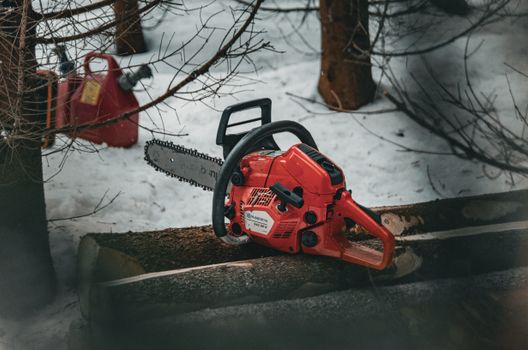
The defining mechanical signature of Motorslice is the chainsaw itself. It does not behave like a standard video game sword. It has friction. When P slices into a piece of heavy machinery, the blade catches, grinds, and requires time to pull through the metal. This creates the game's most brilliant risk-reward loop.
Every time you initiate a cut, you are locked into an animation. The deeper the cut, the longer the animation lock. If you try to carve a massive chunk out of a digger's chassis while it is winding up an attack, you will take catastrophic damage. You have to calculate the exact window of opportunity you have before committing to a slice. A quick, shallow cut is safe but does minimal damage. A deep, sustained carve will cripple the machine, but leaves you completely exposed to environmental hazards or secondary enemies for several seconds.
This friction mechanic completely alters the standard action-game pacing. You are not whittling down a health bar with a flurry of fast strikes. You are looking for a singular, perfect opening to perform a surgical amputation on a machine. This means you will spend 80% of a fight purely evading and positioning, and 20% actually dealing damage. Players who lack patience will find this loop incredibly frustrating. However, once you accept that the chainsaw is a heavy, cumbersome industrial tool rather than a magical weapon, the combat clicks. The satisfaction comes not from frantic combos, but from the calculated execution of a single, devastating cut that dismantles a metal behemoth piece by piece.

Stop Playing It Like a Hack-and-Slash
If you are going to invest time into Motorslice, you must unlearn the instinct to constantly attack. Treat every encounter as a geometry problem first and a combat scenario second. Prioritize your positioning, respect the physical friction of your chainsaw, and use the brutalist architecture to dictate the flow of the fight. The players thriving in this game are the ones who realize that parrying a giant digger isn't about brute force—it's about finding the exact right angle to break the machine's momentum.