The Luna Smart Ring is a compact health-tracking wearable designed to monitor sleep, activity, and recovery metrics without the bulk of a traditional wristband. Instead of relying on a bright touchscreen, it uses embedded infrared sensors to passively collect biometric data. For users trying to decide if a finger-based form factor fits their lifestyle, the central question is whether trading visual feedback for comfort actually improves long-term health tracking consistency.
How the Luna Smart Ring Works
Unlike smartwatches that require constant interaction, the Luna Smart Ring operates entirely in the background. The hardware focuses on passive photoplethysmography (PPG)—shining tiny LED lights through the skin to measure blood flow changes.
Entity → Mechanism → Outcome: The ring (entity) uses infrared LED sensors (mechanism) to calculate resting heart rate, heart rate variability (HRV), and sleep phases (outcome). Because the arteries in the finger are closer to the surface of the skin than those in the wrist, rings often capture more accurate pulse data than wrist-worn devices.
Most models in this category feature a lightweight titanium shell, making them resistant to water and typical daily wear. They require a companion smartphone app to sync data via Bluetooth, as the ring itself has no display.
The Form Factor Trade-off: Ring vs. Watch
Consumers usually gravitate toward smart rings for one of two reasons: they find wristbands uncomfortable to sleep in, or they want something aesthetically minimal. However, choosing a ring over a watch is an exercise in elimination.
Why plausible alternatives lose: A smartwatch wins on real-time feedback, GPS tracking, and media controls. But for sleep tracking, watches often fail due to user discomfort. Users take them off at night, breaking the data chain. The Luna Smart Ring capitalizes on this failure state by offering a form factor users can wear 24/7 without noticing it. If you do not need real-time on-wrist displays or standalone GPS, the watch loses its primary advantage.
Core Tracking Features
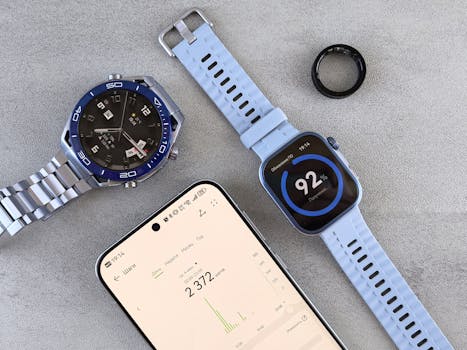
While specific feature sets can vary depending on the exact model generation and app tier, standard smart ring capabilities include:
- Sleep Architecture Analysis: Tracks light, deep, and REM sleep phases based on movement and heart rate data.
- Readiness Scoring: Calculates a daily recovery score using HRV, resting heart rate, and skin temperature deviations to tell you whether to push your training or rest.
- Activity Tracking: Counts steps and estimates caloric burn, though it lacks the spatial awareness of a wrist-worn accelerometer for complex exercises like weightlifting.
- Passive Heart Rate Monitoring: Records continuous heart rate without requiring manual activation.
Beginner Guidance: Getting Started
If you are transitioning from a smartwatch or using a health wearable for the first time, adjusting your expectations is critical. Here is a practical setup checklist to avoid common early frustrations:
- ☐ Confirm Sizing: Smart rings cannot be easily swapped out or adjusted. Use the manufacturer's physical sizing kit before ordering. Wearing the wrong size ruins sensor contact and skews the data.
- ☐ Set Your Primary Hand: Calibrate the app to your dominant hand. Wearing the ring on your dominant hand means higher incidental movement, which the algorithm needs to filter out.
- ☐ Establish a Baseline: Wear the ring continuously for 5 to 7 days before making lifestyle changes based on the data. The app needs time to understand your unique physiological norms.
- ☐ Optimize Battery Habits: Most smart rings last 4 to 7 days on a single charge. Develop a routine—like charging it during your morning shower—so you don't lose overnight sleep data.
Device Comparison: When to Choose a Ring
To decide if the Luna Smart Ring fits your needs, map it against other form factors based on your primary goals.
| Feature Need | Luna Smart Ring | Traditional Smartwatch | Chest Strap Monitor |
|---|---|---|---|
| Unnoticeable Sleep Tracking | Best for this | Poor (bulky) | Poor (uncomfortable) |
| Real-Time Pace & GPS | Not available | Best for this | N/A |
| Highly Accurate HR during lifting | Moderate | Moderate | Best for this |
| Aesthetic / Professional look | Best for this | Moderate | Poor |
Skip if you need standalone GPS tracking for outdoor runs, or if you want to read text messages on your device. Trade-off: you lose the rich visual feedback of a screen in exchange for 24/7 passive tracking comfort.
Frequently Asked Questions
Can I wear the Luna Smart Ring while lifting weights or typing?
Yes, it is generally designed to be durable. However, heavy barbell work or tight gripping can scratch the titanium finish over time. More importantly, intense gripping can temporarily restrict blood flow to the finger, which might result in inaccurate heart rate spikes during heavy sets.
Do smart rings require a monthly subscription?
This depends heavily on the manufacturer's monetization model. Some offer basic metrics for free but gate advanced insights (like detailed sleep architecture or long-term trend analysis) behind a monthly app subscription. Check the pricing structure before committing to ensure the features you want are included in the base hardware cost.
How does a ring track steps if it's on my finger?
It uses an accelerometer to detect motion patterns. Because your hands swing naturally during walking, the ring extrapolates step count from that rhythm. However, because hands move independently of legs, step counts on rings are sometimes less precise than wrist-worn devices if you are pushing a stroller or carrying heavy objects.