Resident Evil 7 Biohazard (2017) ditched third-person action for claustrophobic first-person horror, dropping players into a rotting Louisiana plantation stalked by the cannibal Baker family. It's the franchise's most intimate reinvention—tight corridors, scarce ammo, and a story that rewards curiosity over combat prowess.
Resident Evil 7 revived the series by stripping it down to dread
Capcom released RE7 in January 2017 after Resident Evil 6 received criticism for bloated action setpieces. The pivot worked. First-person perspective. Photogrammetry-scanned environments. A single location instead of globe-trotting.
Sales crossed 13 million copies by 2024, making it the best-selling Resident Evil title. The game also launched PlayStation VR support—still among the most immersive (and nauseating) horror experiences available.
Current relevance? RE7 directly sets up Resident Evil Village (2021). Same protagonist. Same Mold infection lore. Players skipping RE7 miss foundational character relationships and plot threads that Village assumes you know.

Core gameplay loop: explore, scavenge, flee, repeat
RE7 operates on resource anxiety. Every bullet spent is a bullet you might need for the next encounter. The game teaches this brutally in the first hour.
How does inventory management work in Resident Evil 7?
Ethan starts with 12 slots. No upgrades exist in the base game without DLC additions. Key items, weapons, ammo, healing supplies, and crafting materials all compete for space.
Critical inventory habits:
- Store duplicate keys and plot items in item boxes once their doors are unlocked
- Combine chem fluid + herb immediately to free a slot; carry the resulting first aid med instead
- Leave gunpowder uncombined until you know which ammo type you'll need
- Antique coins (used for bird cage rewards) stack—always grab them
Item boxes appear in safe rooms. These rooms feature save points (cassette recorders), a calming green tint, and no enemies. Learn their locations. You'll backtrack to them constantly.
What is the combat actually like?
Guns feel deliberately clumsy. Aim drift. Slow reloads. Limited reticle precision. This isn't a bug—it's the design enforcing vulnerability.
Headshots matter enormously. The Molded (standard enemies) absorb body shots inefficiently. Two headshots from the handgun typically drop one. Three or four body shots waste ammo.
Weapon hierarchy for beginners:
| Weapon | Best Use | Ammo Scarcity |
|---|---|---|
| Handgun (G17) | Molded patrols, weak spots | Moderate |
| Shotgun (M37) | Close ambushes, groups | Scarce |
| Flamethrower | Marguerite's insect swarms | Fuel pickups |
| Grenade Launcher | Boss weak phases, crowd control | Very scarce |
| Albert-01R | Final encounters only | Plot-given |
Blocking reduces damage significantly. Hold L1/LB when escape isn't possible. Most players ignore this mechanic initially and hemorrhage healing items.
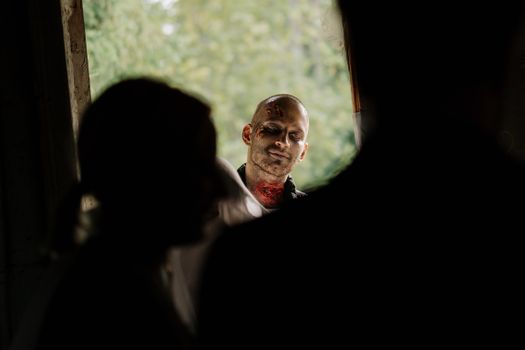
The Baker family: encounters that break standard combat rules
Jack, Marguerite, and Lucas Baker function as unkillable stalkers for extended sequences—similar to Resident Evil 2's Mr. X, but earlier and more frequent.
How do you deal with Jack Baker when he keeps chasing you?
Jack cannot be permanently killed until specific story triggers. Shotgun blasts to the head stagger him. Use the stagger to sprint past or reach a safe room.
Jack encounter phases:
- Main house: First appearance is scripted; hide in the laundry room or loop kitchen-to-hallway
- Garage fight: First "kill"—use the car; don't waste ammo shooting
- Subsequent returns: Headshot stagger, run; he respawns after ~90 seconds in most areas
Marguerite behaves differently. She summons insect swarms and retreats to elevated positions. The flamethrower (found in the Old House) neutralizes her bugs. Without it, you're burning handgun ammo inefficiently.
Lucas abandons direct combat entirely. His zone is puzzle-based, including a death-trap birthday room that players frequently fail on first attempt.

VHS tapes: the mechanic that rewrites how you explore
Found footage segments let you play as other characters in past events. These aren't cutscenes—you control movement, solve minor puzzles, and crucially, witness hidden item locations that persist in Ethan's timeline.
Tape strategy:
- Always watch the full tape before exploring its associated area
- Note locked drawers, hidden passages, and item placements
- The "Derelict House Footage" tape reveals the attic ladder location—miss this and you'll wander aimlessly
This mechanic creates unique information asymmetry. You know where things are. Ethan doesn't. The tension comes from reaching those spots safely.

Progression systems: what carries over and what doesn't
RE7 uses a straightforward unlock structure tied to completion records.
| Unlock Condition | Reward | Impact |
|---|---|---|
| Complete any difficulty | Madhouse difficulty | Enemies tougher, saves cost cassette tapes, item locations randomized |
| Complete under 4 hours | Walking Shoes (faster movement) | Speedrun essential |
| Complete under 4 hours on Madhouse | X-Ray Glasses (see items through walls) | Reveals all secrets |
| Collect all files | Albert-01R infinite ammo | Post-game power fantasy |
These unlocks apply to subsequent playthroughs. No RPG-style leveling exists. Character power comes entirely from player knowledge—where items spawn, enemy patrol routes, optimal resource allocation.
Difficulty modes: which should beginners actually choose?
Normal difficulty suits first-timers genuinely. Ammo is tight but survivable. Bosses telegraph attacks clearly. Save rooms are generous.
Madhouse difficulty, unlocked after first completion, fundamentally alters the experience:
- Save points require cassette tapes—limited consumable items
- Enemy placement changes; early Molded appear in previously safe corridors
- Antique coin locations shuffle; bird cage rewards restructured
- Jack stalks more aggressively with shorter respawn timers
Honest assessment: Madhouse first is masochistic. The randomized elements punish blind exploration. Complete Normal, learn layouts, then return.
DLC and post-launch content: what's worth playing?
RE7 received substantial post-launch support across two waves.
What does Banned Footage Vol. 1 & 2 add?
Vol. 1 includes "Nightmare" (wave-based survival), "Bedroom" (escape room with Marguerite patrols), and "Ethan Must Die" (roguelike difficulty spike). Vol. 2 adds "21" (blackjack with torture stakes), "Daughters" (prequel showing Baker family infection), and "Jack's 55th Birthday" (comedic score-attack mode).
"Bedroom" and "Daughters" provide genuine narrative value. The rest are mechanical experiments—competent but inessential.
How do Not a Hero and End of Zoe connect to the main story?
Not a Hero (free DLC, March 2018) stars Chris Redfield pursuing Lucas Baker post-main campaign. Third-person perspective returns briefly. Underground lab setting. More action-oriented than base game—addressing complaints that the ending felt abrupt.
End of Zoe (paid DLC) resolves Zoe Baker's fate, a dangling thread from Ethan's choice-based finale. Features Joe Baker, a new playable character with melee-focused combat. Swamp setting. Distinct tone—almost action-comedy compared to base game's dread.
Both DLCs assume main campaign completion. Play order: RE7 base → Not a Hero → End of Zoe.
Beginner survival guide: 12 rules that prevent restarts
These come from observed failure patterns, not idealized play.
- Check drawers. Half the handgun ammo in the main house hides in furniture most players ignore.
- Run past non-blocking Molded. If they're not guarding a required path, the ammo cost exceeds the threat.
- Combine green + red herb only when desperate. Green alone heals sufficiently; save reds for poison cure or defense boost in boss fights.
- Psychostimulants reveal everything nearby. Use before leaving an area, not upon entering.
- Steroids permanently increase max health. Irreplaceable. Don't miss them.
- The shadow puzzle in the main hall requires specific positioning—move the object, not just your perspective.
- Boiler room sequence: crouch under the floor immediately; standing triggers Jack's detection faster.
- Old House cranks have multiple uses; don't discard after first door.
- Ship section (late game) restricts inventory severely; plan item box deposits before boarding.
- Final boss weak point exposes after specific attack patterns; don't waste ammo during invulnerable phases.
- Always carry one spare healing item. Zero heals guarantees a death spiral.
- Listen for audio cues. Jack's humming, Marguerite's insects, Molded's wet footsteps—each has distinct sound design.
FAQ: what new players actually ask
How long is Resident Evil 7?
First playthrough: 8-12 hours. Speedrunners hit sub-2 hours routinely. Completionist runs with all files, coins, and Mr. Everywhere bobbleheads: 15-20 hours.
Do I need to play previous Resident Evil games first?
No. RE7 is deliberately isolated. The Connections (bio-terror organization) and Eveline's origin are self-contained. Chris Redfield's appearance in DLC assumes basic franchise recognition but nothing specific.
Is Resident Evil 7 actually scary or just gross?
Both, but the scare design differs from jump-scare factory horror. Sustained dread dominates. The Baker house creaks and breathes. Jack's unpredictable patrols create tension through uncertainty, not scripted frights. The gross-out elements (molded flesh, insect nests) serve the decay aesthetic rather than carrying the horror alone.
What's the deal with the choice at the end?
Without spoiling specifics: Ethan chooses between two characters. One choice leads to the canonical ending (setting up Village). The other provides alternate dialogue and a different final boss phase. Both unlock; the "wrong" choice isn't punished.
Does VR mode still work?
PlayStation VR1 support remains functional on PS4/PS5 via backward compatibility. No native PSVR2 upgrade announced. PC VR requires modding. The VR experience is extraordinarily immersive but intensifies motion sickness—short sessions recommended.
Why does the game look muddy on base consoles?
RE7 pushed visual fidelity aggressively. Base PS4/Xbox One run at dynamic resolution often dipping below 1080p. Pro/One X enhancements help substantially. PC with modern hardware eliminates this entirely.
Where to start: a concrete first session plan
Hour 1: Play through the guest house prologue. Don't worry about missing items—it's linear. Absorb the tone shift.
Hour 2-3: Main house exploration. Prioritize: handgun location, first item box access, garage key. Don't fight Jack unless trapped.
Hour 4: First boss encounter (garage). Use the environment. Save ammo.
Break point: If frustration peaks, the game intentionally frontloads difficulty. It becomes more manageable once you have the shotgun and broader map access.
Before quitting: Always return to a save room. Unsaved progress in RE7 can represent 20-40 minutes of careful resource management.
Final honest notes
RE7's opening hour is its weakest for some players. The guest house teases freedom the main house initially restricts. Stick through the linear sequence—opening up happens after obtaining the three dog-head medallions.
The Molded designs grow repetitive. Later areas introduce variations (spiked arm, bloated explosive type), but the base enemy lacks visual progression. This is a known limitation, not player imagination.
Inventory Tetris frustrates everyone. Even veterans. The 12-slot limit is deliberately punishing and never fully resolves.
These friction points don't undermine the achievement. RE7 rescued a franchise from creative bankruptcy through radical restraint. One house. One family. One perspective. The horror works because Capcom accepted limitations rather than fighting them.