Gamers and PC builders calculating their next storage upgrade are facing a frustrating reality: the highest-capacity hardware isn't being built for you anymore. Micron’s new 245 TB 6600 ION SSD is a hyperscale behemoth designed exclusively to feed data-hungry AI data centers. While it boasts 13,700 MB/s read speeds and massive density, its existence highlights a brutal pivot in flash memory manufacturing that leaves consumer storage stagnant and increasingly expensive.
The Enterprise Cannibalization of Consumer Storage
You probably assume that massive breakthroughs in enterprise hardware mean cheaper, higher-capacity consumer drives are just around the corner. That is how the tech industry usually works. You would be wrong. The current state of flash memory is a zero-sum game, and AI data centers are winning all the silicon.
When you sit down to calculate the cost of a new PC build, you might wonder why high-capacity NVMe drives remain stubbornly expensive. The answer lies in products exactly like the Micron 6600 ION SSD. Micron claims this is the world’s highest capacity commercially available SSD. It relies on advanced QLC NAND technology that the company states is a full generation ahead of competing QLC designs. But that cutting-edge silicon is not being cut into 8TB sticks for your motherboard. It is being hoarded into 245 TB bricks for enterprise clients.
The math driving this shift is entirely focused on physical infrastructure. According to Micron, deploying these massive SSDs requires 82% fewer racks compared to traditional HDD deployments. That single statistic dictates the entire storage market right now. Data center floor space is incredibly expensive. Cooling those racks is even more expensive. If a hyperscale facility can eliminate 82% of its physical storage footprint while dramatically increasing its data density, the upfront cost of the drive becomes irrelevant.
Hardware manufacturers know this. They are prioritizing enterprise production lines because companies building AI models will pay absolute premiums for density. Every wafer of advanced QLC NAND dedicated to a 245 TB enterprise drive is a wafer not being used to drive down the cost of consumer storage. The trickle-down effect has stopped. Instead, the top of the market is actively cannibalizing the supply chain, leaving PC gamers and everyday users fighting over older tech and stagnant capacities.
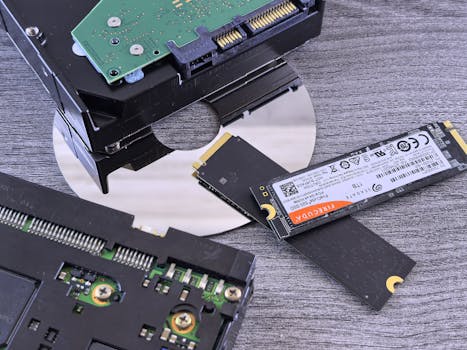
Calculating the Trade-offs of Hyperscale Architecture
To understand why this drive exists—and why you wouldn't actually want it in a gaming PC even if you could afford it—you have to look at the extreme asymmetry of its performance metrics. The Micron 6600 ION delivers sequential read speeds of 13,700 MB/s. That is blistering fast. However, its sequential write speed is only 3,000 MB/s.
This massive gap between read and write performance reveals the exact decision problem this hardware solves. AI workloads, cloud computing, and large language models are heavily biased toward reading data. You train the model, write the massive dataset to the drive once, and then read from it millions of times. A 3,000 MB/s write speed is actually quite slow by modern enthusiast standards—many mid-range consumer drives easily double that. But in the enterprise space, raw write speed is happily traded away for density and read performance.
The real engineering marvel here is the power calculation. Micron rates this 245 TB drive at a maximum power draw of just 30 watts. They note this uses half the power of a comparably capacious HDD setup. Let’s look at a hypothetical calculation to put that 30-watt figure into perspective.
| Storage Scenario (Hypothetical) | Drives Needed for ~245 TB | Estimated Max Power Draw |
|---|---|---|
| Micron 6600 ION | 1 | 30 Watts |
| High-End 4TB Consumer NVMe | 62 | ~430 Watts (at 7W each) |
| Standard 20TB Enterprise HDD | 13 | ~117 Watts (at 9W each) |
If you tried to calculate the power requirements to reach 245 TB using standard 4TB consumer NVMe drives, the results would be catastrophic for a single system. You would need over sixty drives. Even if you could find a motherboard with enough PCIe lanes—which you cannot—the combined power draw would easily exceed 400 watts just for storage. The heat generated would melt the chassis. By condensing that capacity into a single 30-watt unit, Micron completely rewrites the thermal and power calculations for data center architects.
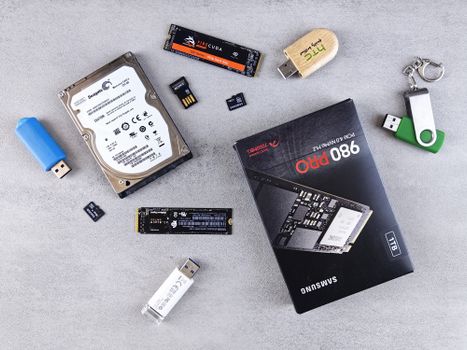
What This Market Shift Means for Your Next Upgrade
For the curious player or PC builder, the existence of a 245 TB SSD requires a shift in how you plan your own hardware upgrades. The game industry is pushing install sizes past the 150 GB mark with alarming regularity. You need more space. But you can no longer rely on the assumption that 8TB or 16TB SSDs will soon become affordable commodities.
The flash memory market has bifurcated. On one side, you have the hyper-dense, hyper-expensive AI storage solutions like the 6600 ION. On the other side, you have consumer storage, which is largely stuck iterating on 2TB and 4TB capacities. Because manufacturers are funneling their best QLC NAND into the data center market to satisfy AI demands, consumer storage prices are highly volatile.
When you calculate your storage needs for the next few years, you must factor in this bottleneck. Do not delay a necessary storage upgrade because you think a massive price crash is coming. The silicon is going elsewhere.
Instead of waiting for a mythical cheap 8TB drive, focus your budget on a tiered storage strategy. Buy a fast 2TB or 4TB NVMe drive for your active operating system and currently played games. Then, supplement that with cheaper, older tech for your archives. The hyperscale market has proven that density and power efficiency matter far more than symmetrical read/write speeds. You should apply that same logic to your own system. Accept that the bleeding edge of storage capacity has permanently moved to the server rack, and build your PC based on the hardware that is actually meant for you.
The Final Calculation
Stop waiting for enterprise storage density to trickle down to consumer pricing. Calculate your exact storage needs for the next two years, buy the best 2TB or 4TB drives available right now, and accept that the future of massive flash memory belongs entirely to the AI sector.