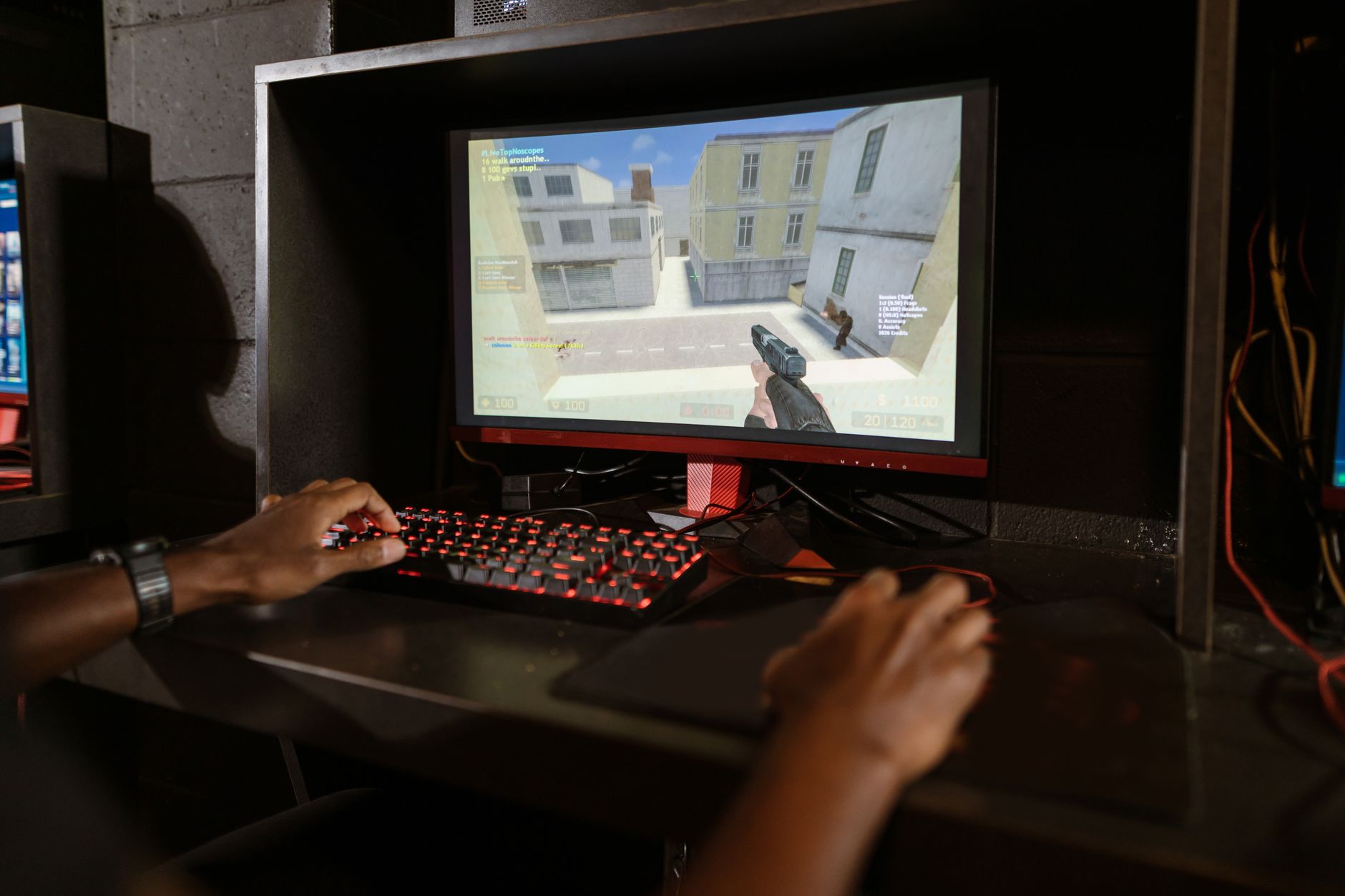
Isowulf is a total conversion mod by creator LoGeKyl that rebuilds the 1992 classic Wolfenstein 3D as an isometric, top-down shooter. Instead of modernizing the game, it intentionally regresses the perspective to ask a historical question: what if id Software had built a sequel to the 1980s Castle Wolfenstein instead of inventing the first-person shooter? For returning players, it trades the high-speed twitch reflexes of the original for slower, more deliberate spatial puzzle-solving, fundamentally altering how you manage sightlines, enemy aggro, and maze navigation.
The Anti-Modernization Wedge and Decision Archaeology
Most retro game modding operates on a strict doctrine of modernization. A community takes an aging classic and aggressively sands down its rough edges. They inject mouselook, upscale the textures, uncap the framerates, and bolt on modern lighting engines. The underlying assumption is always that older games were compromised by their hardware, and modders are finally setting them free.
Isowulf creator LoGeKyl completely rejects this premise. When approaching Wolfenstein 3D, he did not ask how to improve the experience. He asked a much stranger question: what if this was an entirely different, and arguably worse, game?
To understand why a player should care about this today, you have to look at the historical pivot point this mod represents. In the early 90s, the founders of id Software—John Carmack, John Romero, Adrian Carmack, and Tom Hall—were coming off the success of the 2D platformer Commander Keen. Seeing those specific credits on a screen was the exact moment LoGeKyl realized that real, identifiable people made video games. That realization drove his desire to become a developer. But it also highlights a fragile moment in PC gaming history. If id Software had not aggressively pursued the pseudo-3D raycasting technology that powered Wolfenstein 3D, the first-person shooter genre as we know it might never have materialized.
Isowulf simulates that alternate timeline. By flattening the perspective into an isometric view, the mod forces you to play the game id Software would have made if they had stayed true to the top-down, stealth-action roots of the original 1980s Castle Wolfenstein. You are effectively playing a piece of decision archaeology. The mod strips away the visceral, forward-facing momentum that eventually birthed Doom. In its place, it installs a methodical, puzzle-like framework. You are no longer the tip of a spear driving through a Nazi stronghold. You are a tactician managing a cursor on a hostile grid. This shifts the cognitive load entirely. The original game tested your reaction time; Isowulf tests your spatial planning.
Gameplay Loops and the Isometric Trade-Off
Changing the camera angle in a video game does not just alter the visuals. It completely rewires the core gameplay loop, creating new bottlenecks and destroying old strategies. In the original first-person Wolfenstein 3D, your primary defensive mechanic is the doorway. Because your vision is restricted to what is directly in front of you, you rely heavily on audio cues. You open a door, fire a single shot to wake up the room, and let the guards funnel through a narrow chokepoint while you hold the trigger down. It is an audio-driven shooting gallery.
When you switch to Isowulf’s isometric view, this entire system breaks down and rebuilds itself around a different set of constraints. You instantly gain omniscient peripheral vision. You can see the layout of a room, the placement of the guards, and the location of the treasure before you ever step foot inside.
This creates a massive asymmetry in how you approach combat. You gain perfect situational awareness, but you lose the immediacy of first-person aiming.
- The Sightline Trade-off: In first-person, if you can see an enemy, you can usually shoot them. In an isometric grid, judging exact lines of sight on a diagonal axis is notoriously tricky. You will frequently find your shots catching the corner of a wall that looked clear from your bird's-eye view.
- The Aggro Bottleneck: Because you can see further around corners, the temptation is to rush. This is a trap. Isometric cameras often make it harder to prioritize targets in a dense crowd. When guards swarm you from multiple angles in 3D, they line up in your crosshair. When they swarm you in Isowulf, they surround your character model, requiring rapid, imprecise mouse clicks across a 2D plane to clear them out.
- Secret Hunting: The original game famously required players to slide against every wall pressing the interact key to find hidden rooms. Isowulf turns this into a visual geometry puzzle. You are now looking for architectural anomalies from above, changing exploration from a tedious physical chore into a rewarding visual test.
New players firing up Isowulf need to immediately unlearn their 1992 muscle memory. Do not attempt to play this like a boomer shooter. Treat it like a real-time tactical game. Your first priority should be mastering the movement on the isometric grid and learning exactly how close you can get to an enemy's patrol path before triggering their alert state. The challenge is no longer about how fast you can pull the trigger, but whether you chose the right angle of attack before the fight even started.

Rethinking the Retro Experience
If you install Isowulf expecting a nostalgic adrenaline rush, you will walk away frustrated by the deliberate pacing and grid-based targeting. Instead, approach it as an interactive museum exhibit from a timeline that never happened. The one thing you must do differently here is abandon the "run and gun" mentality entirely; slow down, use your unnatural camera advantage to scout every room, and treat every encounter as a spatial puzzle rather than a reflex test.