Verdict: Play now for free if you want tactical, high-stakes battle royale on phone or tablet. Avoid if you expect fair cosmetic progression without spending or you need quick, casual matches that respect your time. PUBG MOBILE remains the most mechanically dense mobile shooter available, but its monetization model has mutated far beyond the original PC game's pay-once structure. The core gunplay still rewards patience and positioning over reflexes—unlike arcade alternatives—but that same density creates a brutal onboarding cliff that costs you dozens of hours before competitive matches feel winnable through skill alone.
The Hidden Cost of "Free": How Monetization Reshapes Every Session
Here's the assumption most players get wrong: PUBG MOBILE is not "free-to-play" in the same economic sense as, say, a battle pass system where spending $10-15 per season unlocks everything meaningful. The Google Play store page lists "In-app purchases" alongside ads, but that label undersells the psychological architecture. The game runs a layered monetization stack—cosmetic gacha for character skins and weapon finishes, seasonal battle passes, limited-time event crates, and gameplay-affecting vehicle skins that alter hitbox visibility. None of this breaks competitive balance directly; a default-skinned player with identical loot kills just as fast. But the perception of progression becomes warped.
The hidden variable most reviewers miss: visual clutter as competitive disadvantage. Players who spend heavily acquire animated outfits, glowing backpacks, and weapon trails that render them more visible at distance. In a game where spotting enemies first often decides fights, default cosmetics function as unintentional camouflage. The trade-off is asymmetric. Spending money gains you social status and minor visibility penalties. Playing free gains you functional stealth but locks you out of seasonal ranking rewards and clan recognition systems that gate social features.
This matters for your decision because PUBG MOBILE's onboarding already demands 15-20 hours before recoil patterns, map rotations, and circle timing feel intuitive. Layer monetization FOMO onto that learning curve and many players burn out before the core loop clicks. If you're evaluating whether to start now, ask yourself: do you tolerate games where cosmetic progression is intentionally throttled to push spending, or does that resentment poison the experience? For players in the second camp, even the excellent gunplay won't salvage the long-term relationship.
Performance compounds this tension. The Play Store page promises "smoothest gunplay" and "highest fidelity," but the game scales aggressively across device tiers. Mid-range phones from 2022-2023 often default to low render distances and simplified textures, which means grass that hides enemies on flagship devices renders as flat green planes on budget hardware. This isn't advertised transparently. You discover it when a prone player you should see becomes invisible due to your settings. The workaround—manually tuning graphics at cost of frame rate—requires technical literacy the game doesn't teach.
What 100+ Hours Actually Feels Like: Pacing, Mechanics, and the Skill Ceiling
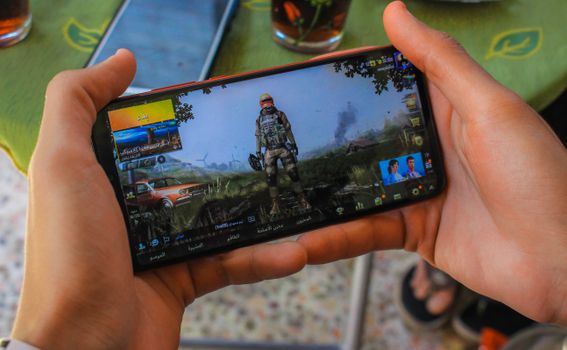
PUBG MOBILE's pacing is deliberately cruel in ways that separate it from mobile competitors. Matches run 25-35 minutes in Classic mode, with the first 10 often consisting of looting and positioning before meaningful contact. This is not a bug. The design philosophy rewards information gathering: listening for vehicle sounds, reading circle predictions, choosing when to third-party existing fights. Compare this to Arena mode's 4v4 deathmatches or the 10-minute "extreme battles" marketed on the store page. Those modes exist, but they're side dishes. The main course demands patience that mobile gaming conventions typically discourage.
After meaningful playtime, the mechanical depth reveals itself in specific, teachable ways. Weapon recoil follows fixed patterns learnable in training mode—unlike the random spread of some competitors. Bullet drop and travel time exist for sniper rifles. Vehicle physics allow deliberate rolls and jumps. The skill ceiling is genuinely high, which creates the rare mobile environment where veteran players consistently dominate rather than losing to randomness or pay-to-win mechanics.
But the onboarding fails to communicate this depth. The tutorial covers basic movement and shooting, then dumps you into bot-filled early matches that teach bad habits. New players learn to sprint openly, fire at distant targets with submachine guns, and ignore sound cues because early lobbies are so forgiving. The transition to real lobbies around level 10-15 feels like a different game—suddenly you're dying to players who heard your footsteps 30 seconds ago and set an ambush. This isn't labeled as a difficulty spike. It just happens.
For decision-making: if you want immediate gratification or consistent 15-minute sessions, PUBG MOBILE's Classic mode will frustrate you. The game is best for players who treat mobile gaming as a primary hobby rather than a commute filler, who can dedicate uninterrupted 30-40 minute blocks, and who find satisfaction in incremental mastery rather than rapid progression. Parents, busy professionals with fragmented attention, or players seeking social party games should avoid Classic mode specifically—Arena and Team Deathmatch alternatives exist but feel underdeveloped compared to dedicated arena shooters.
The update cadence shapes this recommendation dynamically. PUBG MOBILE adds maps, modes, and seasonal events frequently, but the core Classic experience changes slowly. If you're waiting for a fundamental overhaul—say, shorter default matches or reworked monetization—you'll wait indefinitely. The game knows its identity and iterates at the margins. Revisit after an update only if you specifically want new maps or limited modes; don't expect systemic change.
Who Should Play, Who Should Skip, and What Would Change the Verdict
Play now if: You want mobile's most tactically demanding battle royale, you can tolerate opaque monetization without engaging financially, you have hardware that runs at stable 60fps, and you prefer methodical pacing over instant action. The gunplay reward is real and rare on mobile.
Skip if: You need fair cosmetic progression, you play in short fragmented sessions, you run budget hardware more than two years old, or you find battle royale tension stressful rather than exciting. Also skip if you're comparing to PC/console PUBG expecting identical experience—the mobile version's auto-aim assistance, simplified looting, and bot backfill create a different, easier game that shares branding more than identity.
Wait for sale/free trial if: You're curious but uncertain about the time investment. The base game is permanently free, so "wait" here means wait for a friend to onboard with you, or wait until you have a two-week window where 30-minute daily sessions feel feasible. Solo queue is significantly harder and less social than squad play.
Revisit after update if: You previously quit due to specific map fatigue or mode absence. The live service structure means content gaps fill eventually, though the core monetization and pacing assumptions remain constant.
The one caveat that would flip this verdict: if future updates introduced a subscription tier that removed ads and unlocked battle pass progression at flat monthly rate, the value proposition would shift dramatically. Currently the spending ladder extends infinitely—there's no "done" point for collectors. A capped alternative would make the game easier to recommend to monetization-averse players without changing competitive integrity.

Conclusion
Stop treating PUBG MOBILE as a casual download. It's a hardcore tactical shooter wearing mobile-friendly marketing, and that mismatch burns out more players than the actual difficulty. If you start, commit to 20 hours of deliberate practice before judging the loop. If you can't make that commitment, save your storage space and attention for something that respects fragmented time—because this game won't, and its best moments require the investment it demands.