Pokemon Brilliant Diamond and Shining Pearl - Latest News & Updates
Headline Summary
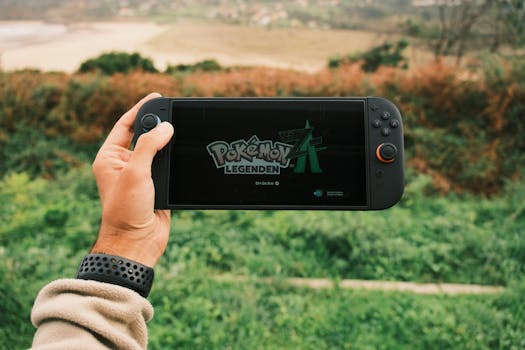
The long-awaited remakes of the beloved Nintendo DS classic Pokémon Diamond and Pearl have arrived on the Nintendo Switch. Developed by ILCA, Inc. under the supervision of The Pokémon Company and Game Freak, Pokémon Brilliant Diamond and Shining Pearl (BDSP) offer a faithful, top-down recreation of the Sinnoh region. Released globally on November 19, 2021, the games invite both returning veterans and a new generation of trainers to experience the nostalgic journey, complete with modern quality-of-life updates, underground secret bases, and the highly anticipated return of Super Contest Shows. While the titles forego the open-world mechanics of recent mainline entries in favor of a traditional, grid-based adventure, they represent a significant milestone in the franchise’s sprawling history by fully remaking the fourth generation of Pokémon games for a modern console.
Background
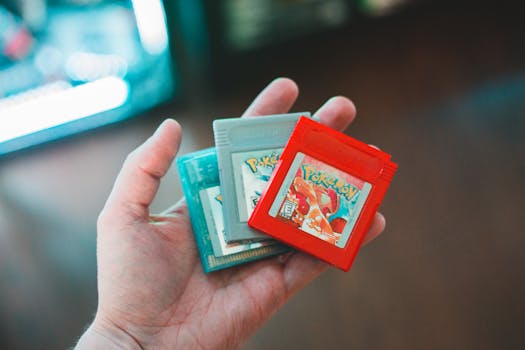
To understand the significance of Brilliant Diamond and Shining Pearl, one must look back to 2006. The original Pokémon Diamond and Pearl launched in Japan for the Nintendo DS, introducing the Sinnoh region—a vast, rugged landmass inspired by the Japanese island of Hokkaido. For many fans, Generation IV represents a golden era of Pokémon. It was an era defined by the physical/special split in battle mechanics, the introduction of the Global Trade Station (GTS) that revolutionized online trading, and a narrative that felt remarkably grand for a handheld RPG.
Despite their historical importance, Diamond and Pearl have historically been viewed as some of the most technically sluggish entries in the franchise. The games suffered from notoriously slow battle speeds, cumbersome surfing mechanics, and a regional Pokédex that felt heavily restrictive before the post-game. For years, fans clamored for remakes, especially following the highly successful and creatively reimagined Pokémon Omega Ruby and Alpha Sapphire on the Nintendo 3DS in 2014.
The announcement of BDSP in February 2021 during a Pokémon Presents broadcast was met with a complex mixture of jubilation and bewilderment. The decision to pass development duties from veteran studio Game Freak to ILCA, Inc.—a studio best known for its work on Pokémon Home and Nier: Automata’s background art—was an unprecedented move for a mainline Pokémon title. Furthermore, the reveal trailer showcased a visual style that leaned heavily into a "chibi" aesthetic, raising immediate questions about how these remakes would bridge the gap between 2006 nostalgia and the expectations of a 2021 gaming landscape.
Key Details
A Faithful Visual Translation
Brilliant Diamond and Shining Pearl do not attempt to reinvent the visual wheel. Instead, they take the original Nintendo DS sprite work and essentially transform it into a stylized, 3D diorama. The games utilize a fixed, top-down camera that shifts dynamically during battles, which transition into the modern, fully 3D style established by Pokémon Sword and Shield. While some critics argued that the overworld graphics lacked the ambition of modern Switch titles, the aesthetic choice serves a distinct purpose: it preserves the exact grid-based map layouts, puzzle mechanics, and spatial awareness of the original games without requiring a total geometric rebuild.
Gameplay and Quality-of-Life Features
Underneath the familiar chibi exterior lies a heavily modernized gameplay loop. ILCA has integrated a plethora of quality-of-life features that seamlessly modernize the Sinnoh experience without altering its core identity. The Pokétch, the multi-function smartwatch from the original games, makes its return but is now mapped to the right side of the screen, allowing players to use the Dowsing Machine, check party status, and use the calculator without interrupting gameplay.
Furthermore, BDSP adopts the modern Pokémon-Amie/ Camp mechanics, allowing players to pet, feed, and play with their Pokémon to boost experience gains and friendship levels. Hidden Abilities, which were notoriously difficult to obtain in the original DS titles, are now accessible through the post-game Ramanas Park facility. The games also feature auto-saving options, streamlined bag sorting, and the ability to toggle between Exp. Share for the entire party or classic single-Pokémon experience gains.
The Grand Underground
Perhaps the most drastically overhauled feature is the Grand Underground. Originally a simplistic multiplayer hub for digging up fossils and decorating secret bases, the Underground in BDSP has been transformed into a vast, explorable subterranean biome. Players ride around on customizable digger rigs, traversing massive open caverns that act as "Pokémon Hideaways." These Hideaways contain biomes ranging from snowy tundras to volcanic caves, allowing players to encounter Pokémon from the National Dex long before beating the game. This addition single-handedly fixes the original games' biggest flaw—its lack of diverse team-building options during the main story.
Super Contest Shows
The Pokémon Contests return as Super Contest Shows, fully voiced and animated. Players dress up their Pokémon with specific accessories, perform a dance routine using rhythmic button inputs, and execute visual moves to appeal to the audience and a panel of judges. The mechanics remain largely unchanged from the DS era, but the visual presentation has been dramatically upgraded, making these side events feel like glamorous, interactive variety shows.
- Release Date: November 19, 2021
- Platforms: Nintendo Switch (Exclusive)
- Developer: ILCA, Inc.
- Publisher: The Pokémon Company / Nintendo
- Price: $59.99 USD
- Version Exclusives: Stunky, Murkrow, and Glameow in Brilliant Diamond; Skunktank, Mismagius, and Purugly in Shining Pearl (among others).
Industry Impact
The release of Brilliant Diamond and Shining Pearl sends a fascinating ripple through the modern gaming industry, particularly regarding how legacy publishers handle the remaster versus remake debate. In an era where remakes like Resident Evil 4, Final Fantasy VII Remake, and Demon’s Souls completely re-envision source material from the ground up, BDSP took the controversial "Shadow of the Colossus" approach—rebuilding the exact same game with a new coat of paint and modern mechanical plumbing.
From a business perspective, the strategy is undeniable. The Pokémon franchise is the highest-grossing media empire in human history, and its core audience skews younger with every passing generation. For a ten-year-old picking up a Nintendo Switch in 2021, the original Diamond and Pearl are effectively antiques. BDSP allows The Pokémon Company to capture that entirely new demographic while selling a double-dip of nostalgia to millennials who grew up with the DS. The decision to outsource the project to ILCA also highlights a growing trend in the industry: flagship studios utilizing trusted partner studios to handle remasters, preserving internal resources for original, riskier projects—in this case, allowing Game Freak to focus simultaneously on the development of Pokémon Legends: Arceus.
However, the release also sparked a broader conversation about performance standards on the Nintendo Switch. At launch, BDSP suffered from peculiar frame-rate drops in specific overworld areas, leading to intense scrutiny regarding the Switch's aging hardware capabilities and the optimization of Unreal Engine 4 for top-down, grid-based games. This placed BDSP alongside other high-profile Switch releases like Skyward Sword HD in a contentious ongoing dialogue about whether Nintendo's hybrid console can adequately support the visual ambitions of modern third-party and first-party developers alike.
Player Reaction
The community response to Brilliant Diamond and Shining Pearl has been a masterclass in cognitive dissonance, split sharply down the middle by what players expected versus what players wanted.
On one side, the purists and casual fans have largely celebrated the titles. Forums, social media, and review aggregators are filled with praise for the game’s soothing, nostalgic atmosphere. Fans who spent hundreds of hours in the original underground are ecstatic about the expanded Hideaways, noting that building a team with Pokémon like Houndoom or Umbreon before facing the eighth Gym leader feels like a dream come true. The return of following Pokémon—a feature notoriously absent from the original Diamond and Pearl but present in Pokémon HeartGold and SoulSilver—was met with universal acclaim. Seeing a tiny Chimchar scampering behind the player character adds an immense amount of charm that inherently boosts the emotional attachment to the team.
On the other side, the hardcore competitive community and longtime critics have been far less forgiving. The vocal minority took to platforms like Twitter and Reddit to express deep frustration with the game's artistic direction. The chibi character models, which lack the expressive, proportional style seen in recent promotional artwork for the Sinnoh region (drawn by legendary Pokémon designer Yusuke Kozaki), were labeled as "lifeless" and "cheap." Many players expressed disappointment that BDSP did not incorporate the overworld roaming Pokémon mechanics introduced in Let's Go, Pikachu and Eevee! and expanded upon in Sword and Shield, forcing players back into the traditional "tall grass random encounter" system.
The post-game has also been a point of contention. The original Diamond and Pearl featured a vast post-game island called the Battle Zone, which included the grueling Battle Frontier. BDSP completely omits the Battle Frontier, replacing it with the Ramanas Park—a facility where players use slates found in the Underground to spawn and capture legendary Pokémon from previous generations. While catching Legendaries is inherently rewarding, competitive players mourned the loss of the Battle Frontier’s challenging, randomized battle facilities, viewing its exclusion as a dumbing down of the post-game experience.
What's Next
Brilliant Diamond and Shining Pearl do not exist in a vacuum; they are a vital puzzle piece in The Pokémon Company’s aggressive, multi-pronged strategy for the franchise’s 25th anniversary year. With the remakes now in the hands of players, the immediate future of the franchise is already unfolding.
The most glaring "what's next" is the imminent release of Pokémon Legends: Arceus, which launched on January 28, 2022. Set in the feudal-era Sinnoh region (then known as Hisui), Legends: Arceus serves as a stark tonal and mechanical counterpoint to BDSP. While BDSP looks backward with rigid adherence to tradition, Legends: Arceus looks forward, completely abandoning turn-based battles in the overworld in favor of action-RPG mechanics and seamless creature catching. The simultaneous development and close release windows of these two games present a fascinating case study in brand management, allowing The Pokémon Company to satisfy traditionalists and innovators in the same fiscal quarter.
Looking further ahead, BDSP lays the groundwork for the future of Pokémon connectivity. Players can transfer their captured Sinnoh Pokémon forward into Pokémon Home, and subsequently into Pokémon Scarlet and Violet. This ensures that the hard work put into breeding competitive Pokémon, hunting for Shiny creatures in the Grand Underground, or transferring up beloved legacy partners will not be lost when the franchise transitions to its highly anticipated ninth generation on the Switch.
Furthermore, the success of ILCA’s handling of a mainline title opens the door for future outsourcing. As the Pokémon franchise continues to expand into mobile gaming, animated television, and live-action film, the demand for core RPG titles will only increase. If BDSP proves financially successful—and early sales data indicates it already has—ILCA may very well become a permanent pillar of mainline Pokémon development, potentially helming remakes of other neglected generations like Pokémon Black and White in the future. For now, trainers are firmly rooted in Sinnoh, enjoying a familiar ride that, despite its blemishes, successfully brings one of gaming’s most beloved regions into the modern age.