Racing Master is a sim-heavy mobile racer by NetEase and Codemasters that trades the usual arcade drifting of mobile games for punishing, realistic physics. If you are deciding whether to invest your time in the newly launched worldwide version, the calculation comes down to your patience for gacha mechanics versus your desire for authentic car handling. Your immediate priority should not be chasing the fastest supercar on the banner, but rather securing duplicates of lower-tier cars to dominate the early multiplayer brackets through sheer stat advantage.
The Physics Tax: Why Racing Master Punishes Arcade Habits
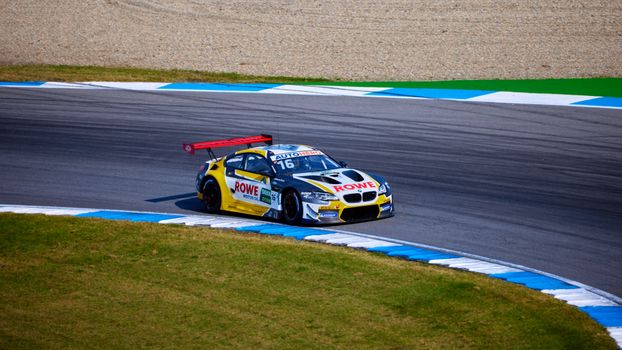
Most players download a new mobile racing game expecting a familiar formula: hold the drift button, build a nitro meter, and blast past the competition on a neon-lit track. Racing Master actively punishes this approach. Co-developed by Codemasters—the studio responsible for the hyper-technical F1 series and Dirt Rally—this game introduces a severe "physics tax" to the mobile platform. You are not playing a reskinned arcade drifter. You are playing a miniaturized simulator where braking zones, weight transfer, and throttle control actually dictate your lap times.
This creates an immediate anti-consensus wedge for new players. The prevailing assumption in mobile racing is that higher top speed equals automatic victory. Here, raw speed is often a liability if you do not understand the handling model. Plunging into a hairpin turn at maximum velocity will not trigger a stylish drift animation; it will result in terminal understeer, sending your car into the barricades and destroying your momentum. The game features tracks recreated from famous real-world circuits, which means you must memorize actual racing lines rather than relying purely on twitch reflexes.
The trade-off for this realism is a remarkably steep early learning curve. Players migrating from casual racers will likely find the initial hours frustrating as they learn to feather the brakes and manage traction. However, this exact friction is why the game holds long-term value. The skill ceiling is exceptionally high. A player who masters the braking points of a specific circuit in a slower car will consistently outpace a sloppy driver behind the wheel of a top-tier exotic.
When calculating your time investment, recognize that Racing Master requires active learning. You cannot zone out and grind races while watching television. The engine sounds, the tire grip physics, and the minute details of the over 100 licensed cars demand attention. If you want a game that respects the actual mechanics of motorsport, the initial frustration is worth the payout. If you just want to go fast without thinking, your time is better spent elsewhere.
Resource Calculation: The Lamborghini vs. Sprinter Dilemma
Because Racing Master is a free-to-play mobile title, its realistic track physics are inevitably married to a gacha-style progression system. The worldwide launch introduces a specific car pool that perfectly illustrates the resource allocation problem every player must solve. The banner features increased drop rates for a wide spectrum of vehicles, ranging from modern Lamborghini supercars to the classic Toyota Sprinter.
Human instinct dictates that you should dump all your launch currency into pulling the Lamborghini. The math of the game strongly suggests otherwise.
In systems like this, acquiring a base-level car is only the first step. To maximize a vehicle's potential, you typically need duplicate pulls to unlock higher tiers of performance or specific tuning nodes. This creates a massive asymmetry in how you should value your garage. A base-level Lamborghini might have excellent starting stats, but it will quickly hit a progression wall because pulling duplicates of a high-rarity supercar is statistically improbable for a free-to-play user.
Conversely, lower-rarity vehicles like the Toyota Sprinter drop far more frequently. By focusing your resources on maxing out a common or uncommon car, you gain access to a fully upgraded machine much earlier in your career. To illustrate this with a hypothetical example: imagine a base-tier supercar has a handling rating of 80, while a fully maxed-out classic car reaches a rating of 85, plus unlocked passive bonuses for cornering stability. On the tight, technical circuits that make up much of the early game, that fully upgraded classic car is mathematically superior.
Your decision shortcut is simple. Treat your premium currency as an investment fund, not a lottery ticket. Use the influx of worldwide launch rewards to build a deep roster of reliable, highly upgraded lower-tier cars. These workhorses will allow you to clear single-player content, farm daily events, and climb the initial ranks of multiplayer without hitting a paywall. Save your targeted pulls for when you have accumulated enough currency to guarantee hitting the pity timer on a specific high-tier banner. Chasing a single exotic car on day one is the fastest way to bankrupt your account.
Early Game Bottlenecks and Launch Event Efficiency
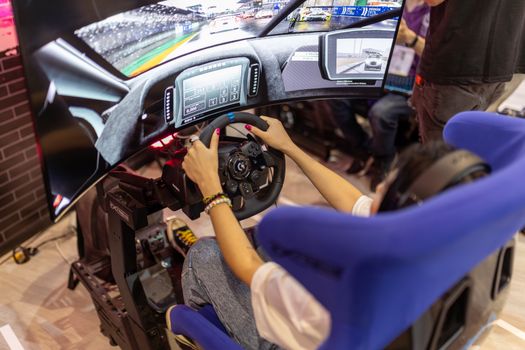
The worldwide launch of Racing Master brings a flood of in-game events designed to accelerate your early progression. Navigating these events efficiently is the difference between stalling out in week two and establishing a self-sustaining garage. New players frequently miscalculate the value of event rewards, prioritizing cosmetic items or raw currency over the actual bottlenecks of the game: upgrade materials.
As you progress, the cost to upgrade your vehicles scales aggressively. You will eventually reach a point where you have plenty of cars but lack the specific parts required to make them competitive. The launch events offer a brief window where these upgrade materials are heavily subsidized.
Your focus should be entirely on the parts shop. When choosing which upgrades to apply first, prioritize handling and acceleration over top speed. On most circuits, the amount of time you spend at absolute maximum velocity is minimal compared to the time spent braking, cornering, and accelerating out of turns. Upgrading your ECU, tires, or suspension yields a much higher return on investment for your lap times than simply bolting on a bigger turbocharger.
Furthermore, you must calculate the time-to-reward ratio of the launch events themselves. Some events require grinding multiplayer races, while others might ask for specific lap times in time trials. Identify which events offer the highest density of upgrade materials for the least amount of active playtime. If a particular time trial requires fifty attempts to shave off a fraction of a second for a minor reward, abandon it. Reallocate that time toward consistently farming multiplayer races where the baseline rewards provide a steady, predictable income of parts.
The hidden variable here is track familiarity. Instead of spreading your upgrades across a dozen different cars to complete every niche event challenge, hyper-focus on one vehicle for each major class (e.g., one front-wheel drive, one rear-wheel drive). Mastering the specific weight transfer of three distinct cars will yield far better race results than driving twenty different cars poorly.
The One Change to Make Today
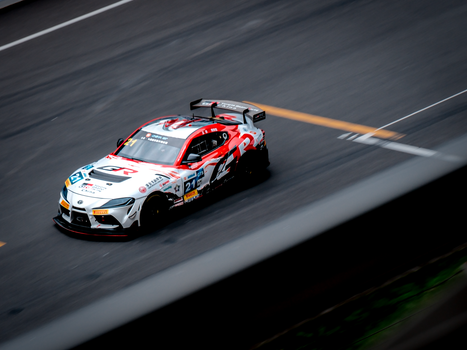
Stop hoarding your early upgrade materials waiting for the perfect S-tier car to drop. Pick the most reliable, easy-to-handle B-tier or C-tier car currently in your garage and upgrade its tires and suspension to the maximum level your account allows. You will immediately shave seconds off your lap times, allowing you to farm the worldwide launch events faster and secure the resources you actually need for the late game.



