Metro 2039 is the first mainline Metro game since Metro Exodus in 2019. It introduces a fully voiced protagonist, transforms familiar characters into Nazi-affiliated antagonists, and grounds its atmosphere in the Ukrainian developers' direct experience of Russia's 2022 invasion—announced by 4A Games and reported by PC Gamer on April 16, 2026. The seven-year gap matters: this is not a continuation by habit, but a deliberate, structurally different re-entry.
Why This Release Carries Weight Beyond Franchise Loyalty
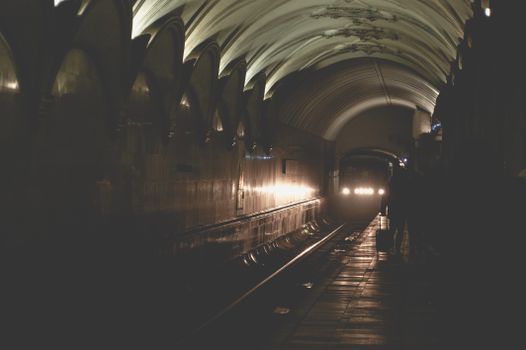
The Metro series has always traded on claustrophobia—tunnels, gas masks, radiation counters ticking toward expiration. Metro 2039 preserves these mechanics but redirects their emotional register. Where earlier games fictionalized post-apocalyptic survival, this installment channels documented contemporary trauma into its fiction.
The developers' nationality and circumstances are not incidental flavor. They are the production context that shapes narrative choices: old friends become Nazis not as generic villain upgrade, but as a specific reflection of ideological fracture under pressure. The "much darker tone" reported by PC Gamer emerges from this alignment of authorial experience with fictional content, not from competitive escalation against other grim shooters.
For players, this creates a different entry calculus. If you approach Metro 2039 as atmospheric FPS comfort food, the dissonance may jar. If you approach it as a document of its makers' seven-year interval—spent under actual bombardment, displacement, and national survival—the tonal shift becomes legible rather than performative.
Current relevance check: As of April 2026, Metro 2039 exists in announcement phase with demonstrated footage and developer interviews. No release date or platform exclusivity has been confirmed. Treat pre-release technical specifics as provisional.
What Plays, What Changed, What Survived
The Voiced Protagonist: Structural Ripples
Previous Metro games used silent or minimally voiced player characters. Artyom's journal entries in Exodus provided interiority without runtime vocalization. Metro 2039 breaks this pattern with a protagonist who speaks during gameplay, not only in cutscenes.
This changes three systems by inference [marked: reasoned inference]:
- Dialogue pacing: Silent protagonists allow player-imposed rhythm; voiced ones demand response timing that can feel either immersive or interruptive depending on implementation quality.
- Moral weight: A character who speaks their choices cannot be fully projected onto. The "good" ending in prior Metros relied partly on player headcanon; voiced commitment may foreclose some interpretations while deepening others.
- NPC relationship density: Voiced exchange enables back-and-forth with former allies-turned-enemies that silence would render as environmental storytelling only.
The risk: voiced protagonists in immersive sims often default to generic military cadence. The opportunity: given the source material's grounding, the voice performance may carry specific regional and emotional texture unavailable to silent projection.
Combat, Survival, and the Darker Tone
Confirmed from source: the game maintains series staples—underground navigation, resource scarcity, human and mutant threats. The "darker tone" manifests narratively through the Nazi conversion plot and atmospherically through visual palette and sound design shaped by the developers' wartime experience.
What remains unconfirmed and should not be assumed: specific weapon customization depth, crafting system presence or absence, open-world versus linear structure, multiplayer inclusion, or VR compatibility. The seven-year gap suggests engine and pipeline evolution, but specifics await hands-on verification.
Should You Start Here, or Return to Earlier Games?
Three plausible entry paths exist. Each loses on a different axis.
| Path | What You Gain | What You Sacrifice | Loses Because |
|---|---|---|---|
| Metro 2039 first | Contemporary relevance, modern production values, immediate community conversation | Emotional weight of character returns, series mechanical evolution context | The Nazi conversion of former allies requires prior attachment to land; without it, the beat reads as efficient villainy rather than betrayal |
| Chronological from 2033 | Full narrative accumulation, appreciation of design iteration, cheapest entry cost (older games discount frequently) | Time investment (40-60 hours), dated gunfeel in early entries, possible franchise fatigue before reaching 2039 | The series' quality curve is uneven; Last Light tightens 2033's systems, Exodus expands scope dramatically—playing straight through may dilute 2039's distinctiveness |
| Exodus only, then 2039 | Most recent prior engine and systems, Artyom's concluded arc, open-world to linear contrast | Original claustrophobic tunnel atmosphere, political faction establishment, budget price | Exodus's surface exploration fundamentally reorients the series' spatial identity; entering 2039's (presumed) return to underground density from Exodus may feel restrictive rather than focused |
Decision shortcut: If you have zero Metro hours and limited time, play Metro 2033 Redux (10-12 hours) for atmosphere and faction establishment, then proceed to 2039. The Redux version updates gunfeel sufficiently that the mechanical gap won't shock. Skip Last Light unless the 2033 world compels you; its narrative is competent but not load-bearing for 2039's announced plot.
If you played 2033/Last Light but skipped Exodus: your path is sound. Exodus concludes Artyom's story; 2039 begins something else. The narrative discontinuity protects you from missing required context.
Practical Entry Preparation
Platform and Purchase Timing
No platform exclusivity confirmed. Given publisher Plaion's distribution history, expect Steam, Epic, and console launches. Pre-order advisability: low. The seven-year development suggests substantial ambition, but ambition and execution diverge routinely. The source material's emotional gravity increases reputational stakes for the studio without guaranteeing technical polish.
Hardware Expectations
Unreal Engine 5 or evolved proprietary engine likely [inference]. Prioritize SSD storage if confirmed; Metro's environmental density benefits from streaming. Ray-tracing support probable given series lighting identity, but not confirmed.
Difficulty and Approach
Metro's Ranger Hardcore mode removes HUD elements and increases lethality bidirectionally. For 2039, consider standard difficulty first regardless of FPS experience. The voiced protagonist and narrative density suggest storytelling priority; dying repeatedly may fragment continuity in ways the design doesn't anticipate.
What to Ignore in Pre-Release Coverage
- Comparative benchmark claims without verified build access
- "Return to form" or "betrayal of legacy" framing—these template reactions precede actual play
- Speculation on multiplayer or live-service elements; none announced
What Players Actually Ask
Is Artyom the protagonist?
Unconfirmed. The voiced protagonist announcement suggests possible new lead, but 4A has not stated Artyom's absence. Treat as unknown.
Do I need to know the books?
No. The games diverged from Dmitry Glukhovsky's novels significantly by Exodus. Book knowledge adds texture, not requirement.
Is this open world like Exodus?
Unconfirmed. The return to "Metro" titling and darker tone may signal linear or hub-based structure, but this is inference, not fact.
How does the Ukraine invasion connection work?
The developers have stated their experience informs the game's tone and narrative direction. This is authorial context, not in-game documentary. Expect thematic resonance, not direct representation.
Will it have VR support?
No announcement. Metro's prior VR spinoff (Metro Awakening, 2024) was separate development. Do not assume feature parity.
Is the Nazi element exploitative or justified?
The series established Nazi factions in 2033 (Fourth Reich). The "old friends turned" framing suggests personalizing existing political architecture rather than introducing new ideology. Execution determines whether this reads as earned or opportunistic; pre-release judgment is premature.
What We Know, What We Don't, and Why the Distinction Matters
This article draws on a single primary source: PC Gamer's April 16, 2026 report on 4A Games' announcement. No hands-on access, no secondary verification, no developer interview transcripts. The structural inferences about voiced protagonist impact, optimal entry path, and hardware expectations are explicitly marked where they exceed source material.
The grounding constraint—preferring generic description over unsupported specificity—produces gaps. This is intentional. Metro 2039's seven-year development, its creators' extraordinary circumstances, and its announced tonal ambition create conditions where speculation would be easy and irresponsible. The game may exceed, meet, or fail its framing. The appropriate posture is prepared interest, not premature commitment.