Playing retro co-op games requires calculating a strict trade-off between the financial cost of original hardware and the technical friction of emulation. Games like Army of Two: The 40th Day or Resident Evil: Outbreak remain trapped on seventh-generation or older consoles due to licensing hell, lost source code, and shuttered servers. If you want to experience these defining local and tactical co-op loops today, you must weigh the upfront cost of tracking down physical discs and upscalers against the hurdles of configuring fan-hosted servers or tunneling software.
The Hidden Cost of Nostalgia: Licensing Hell and Dead Servers
Most players assume publishers leave beloved co-op games on old hardware because they simply hate money. The reality is far more mundane. The barrier to porting these titles is almost always a nightmare of expired middleware licenses, lost source code, or tangled intellectual property rights. When evaluating whether to invest time and money into playing these trapped classics, you are actually calculating the permanence of copyright law against your own patience.
Take Def Jam: Fight for NY and The Warriors. Both are legendary PlayStation 2 and original Xbox co-op brawlers. Both are permanently stuck on those platforms. Def Jam features the exact likenesses, voice acting, and music tracks of dozens of real-world artists. Renewing those contracts for a modern digital storefront would cost more than the game could ever hope to earn back. The Warriors suffers a similar fate with film licensing. If you want to play them, you cannot wait for a remaster. You have to acquire the original media or emulate them.
Army of Two: The 40th Day presents a different bottleneck. Stuck on the PS3 and Xbox 360, this game features a co-op "Aggro" system that modern shooters completely abandoned. When one player fires their weapon, they glow red and draw enemy attention. The other player turns practically invisible to the AI, allowing for clean flanking maneuvers. It is a brilliant, asymmetric gameplay loop. However, EA shut down the official matchmaking servers years ago.
This creates a heavy decision point for returning players. You can easily play The 40th Day in local split-screen if you own the disc and the console. But if you want to play online with a friend across the country, you lose plug-and-play convenience. You must rely on third-party tunneling software like XLink Kai to trick the consoles into thinking they are on a local LAN network. You gain the ability to play online, but you lose the seamless invite systems of modern gaming.
Evaluating the Gameplay Loops: Tactics vs. Couch Chaos
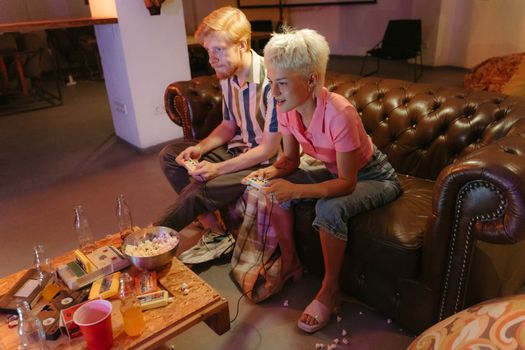
When you strip away the nostalgia, the reason these nine games matter is that they offer mechanics that modern live-service titles actively avoid. Today's co-op games prioritize drop-in, drop-out progression where players largely operate independently in the same sandbox. The best older co-op games forced hard dependencies between players. You either communicated, or you failed.
Resident Evil: Outbreak and Mortal Kombat: Shaolin Monks perfectly illustrate this design philosophy. Outbreak is a PS2 survival horror game that split scarce inventory across four players. The defining system is the "Viral Gauge." Every player is slowly turning into a zombie. Taking damage accelerates the timer. This creates a hard enrage mechanic that forces the team to share healing items and make brutal triage decisions. A new player starting Outbreak today should ignore their modern instinct to hoard ammo. Focus entirely on managing the viral gauge and learning which character-specific starting items complement your partner's build.
Shaolin Monks and Lord of the Rings: The Return of the King rely on a different, yet equally extinct, mechanic: fixed-camera shared-screen brawling. Unlike modern games that split the screen dynamically or tether players loosely, these games lock both players into the same cinematic frame. The trade-off is severe. You gain unmatched cinematic pacing and a shared visual focus, but you lose individual spatial awareness. Your character will frequently get obscured by level geometry.
Splinter Cell: Chaos Theory sits in its own category. The dedicated co-op campaign forces players to physically interact to navigate the environment. You must boost each other over walls, hang upside down from pipes to pull your partner up, and time sniper shots simultaneously. If you are deciding where to invest your retro gaming time, prioritize games like Chaos Theory that feature bespoke co-op campaigns over games that simply add a second player to the single-player mode. The friction of the mechanics is the entire point.

The Hardware Bottleneck: Original Consoles vs. Modern Workarounds
Securing the game is only half the battle. The physical reality of playing older titles like TimeSplitters: Future Perfect or Phantasy Star Online Episodes I & II on modern displays introduces severe hardware bottlenecks. Players often think buying the original disc and console is the end of the journey. It is actually the beginning of a costly hardware chain.
If you plug a standard GameCube or PS2 directly into a modern 4K OLED television using cheap composite cables, the result is virtually unplayable. Modern TVs struggle to process the 480i interlaced signals native to that era. They apply heavy post-processing that introduces massive input lag and smears the image. In a precision shooter like TimeSplitters, a half-second of input delay ruins the experience.
You face a distinct fork in the road. Option one is original hardware paired with a dedicated upscaler. Devices like the Retrotink or the Open Source Scan Converter (OSSC) line-double the analog signal into a clean HDMI output with zero lag. You gain perfect software compatibility and authentic controller feel, but you lose hundreds of dollars out of pocket just to make the game look acceptable.
Option two is software emulation via PC. Emulators can render Phantasy Star Online at native 4K resolution with custom texture packs. Fan communities have even engineered custom servers for PSO and bypassed the dead DNAS authentication checks for Resident Evil: Outbreak. The visual clarity is stunning. However, emulation requires high single-core CPU performance. You trade financial cost for time spent tweaking settings, mapping controllers, and battling shader compilation stutter. Emulation is highly sensitive to hardware configurations, meaning your co-op partner might have a flawless experience while you suffer constant frame drops.
Conclusion: The One Rule for Retro Co-Op
Stop hunting down old hardware just to play early iterations of genres that exist today. If you are going to spend the time configuring XLink Kai or buying expensive HDMI upscalers, spend that effort exclusively on games that offer mechanics the industry left behind. Prioritize the asymmetric aggro of Army of Two, the shared-screen combo meters of Return of the King, or the brutal dependency of Outbreak. Play them because their specific friction cannot be found on modern storefronts.